Why Occupational Therapy
Occupational therapy makes special children as independent as possible. OT plays a significant role in the multidisciplinary approach to supporting children with autism spectrum disorder (ASD). At Gratus Kids, recognized as one of the leading pediatric therapy centers near you in Palakkad, Kerala, occupational therapy focuses on helping children cultivate the vital capabilities they need for everyday routines, academic environments, and spontaneous social interactions. Having the ability to accomplish daily personal tasks independently represents profound, life-altering progress for any child. In this comprehensive guide, we explore why occupational therapy is indispensable for autistic children and how tailored therapeutic interventions transform their confidence and long-term autonomy.
Occupational therapy evaluates a child’s unique sensory profile, motor coordination, neuromuscular tone, and cognitive planning. The ultimate objective is not merely repetitive exercise, but building real-world practical mastery over daily routines so children navigate school, home, and community with dignity.
Sensory Integration in Occupational Therapy
Sensory Integration improves overall sensory processing and nervous system regulation. Children with autism spectrum disorder frequently experience severe sensory processing differences, manifesting as hypersensitivity (sensory defensiveness to loud noises, bright lights, textured fabrics, or sudden movements) or hyposensitivity (sensory seeking through constant spinning, crashing, jumping, or oral fixation).
At Gratus Kids, our dedicated sensory gyms are equipped with specialized suspended swings, weighted compression tools, tactile pathways, and deep-pressure therapy apparatus. Our pediatric occupational therapists design individualized "sensory diets" that systematically desensitize reactive pathways or provide organizing proprioceptive feedback. When a child's nervous system reaches an organized, calm-alert state, their ability to focus, absorb learning, and participate in classroom settings improves dramatically.
Sensory Modulation
Balances physiological over-responsiveness and sensory seeking to prevent sensory meltdowns and cognitive fatigue.
Proprioception & Vestibular
Develops internal body awareness, balance, and spatial navigation through therapeutic climbing, swinging, and compression.
Fine Motor Skills
Everyday tasks such as writing, using scissors, manipulating zippers, holding cutlery, and buttoning clothes can be intensely challenging for children with autism spectrum disorder. Many autistic children experience low finger muscle tone, inadequate palmar arch development, and weak bilateral hand coordination.
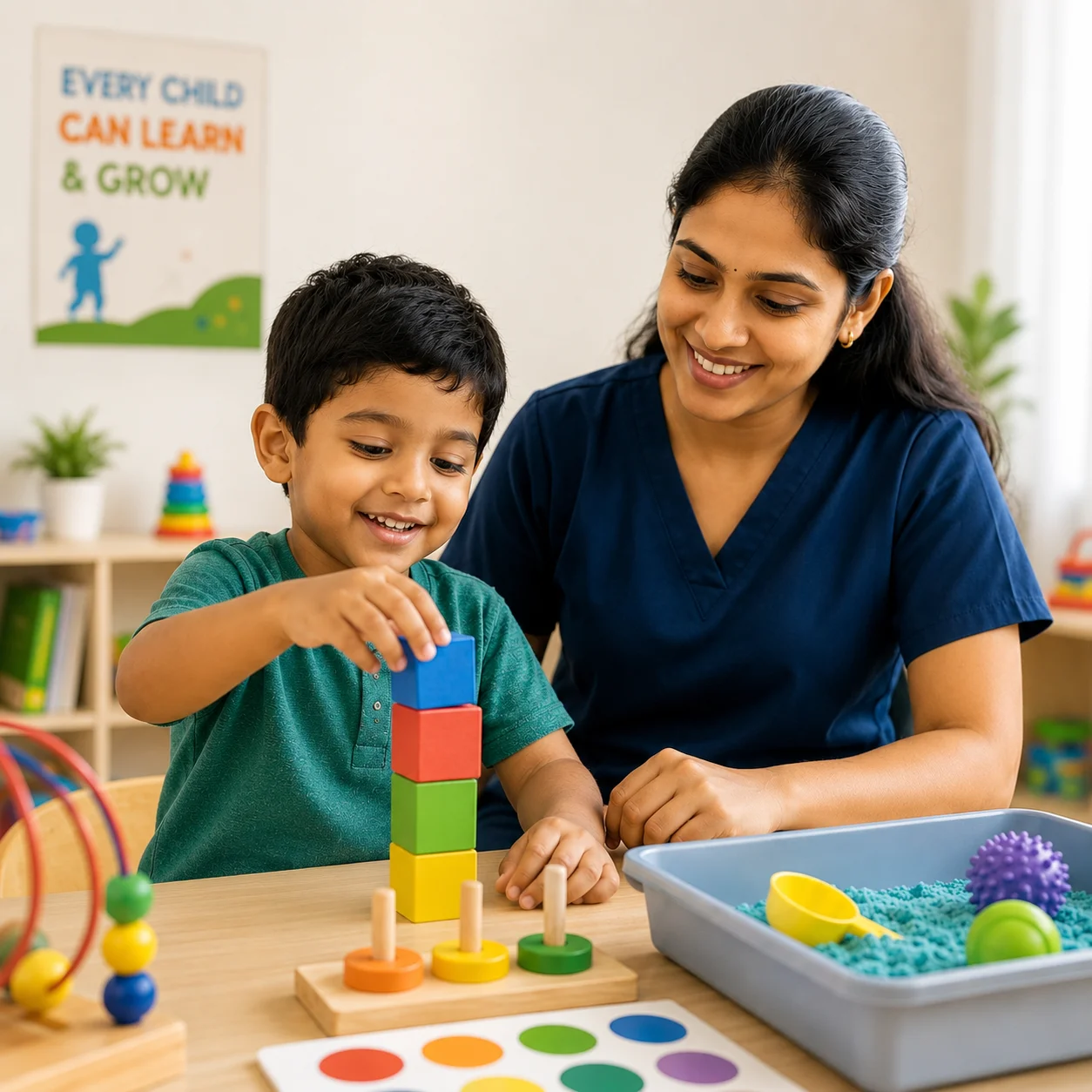
Occupational therapists deploy engaging, play-infused activities - such as therapeutic dough squeezing, precision pegboard insertion, pincer grasp games, and bead threading - to systematically strengthen the intrinsic muscles of the fingers and wrists. Enhancing manual dexterity empowers children to participate comfortably in academic tasks at school and care for their own clothes and lunchboxes without frustration.
Effective For Motor Skills (Gross Motor & Praxis)
As humans, we need coordinated movement to navigate our daily surroundings and engage with our peers. Some children with autism encounter difficulties with postural control, bilateral motor integration, balance, and praxis (motor planning - the neurological ability to conceptualize, plan, and execute a sequence of motor actions).
Occupational therapy addresses gross motor coordination through dynamic obstacle courses, balance beams, scooter board activities, and ball games. At Gratus Kids, our clinical team turns gross motor conditioning into joyous milestones, helping children master running, jumping, catching, climbing stairs, and playing sports with peers. This motor confidence fosters physical health, prevents sedentary isolation, and enhances overall bodily resilience.
Helps to Socialise
One of the core hurdles a child on the autism spectrum faces is social communication and peer interaction. Occupational therapy plays an essential role in bridging this gap by creating predictable, low-anxiety interactive settings.
Therapists utilize structured cooperative games, role-playing, and paired peer tasks to teach fundamental social cues: making comfortable eye contact, taking turns, respecting personal boundaries, sharing resources, and responding to non-verbal cues. Through group sessions, children transition from parallel play to cooperative social play, creating meaningful foundations for lasting friendships in school and neighborhood communities.
Day-to-day Lifestyle (Adaptive Daily Living Skills)
Pediatric occupational therapy directly builds adaptive Activities of Daily Living (ADLs). For an autistic child, tasks like brushing teeth, taking a bath, wearing shoes, toilet hygiene, and self-feeding can be daunting due to sensory sensitivities (like the taste of toothpaste or texture of water) combined with motor sequencing difficulties.
Our occupational therapists deconstruct complex routines into bite-sized, sequential visual schedules and social stories. Step-by-step chaining enables children to master one part of the routine at a time until the entire task becomes second nature. Achieving self-reliance in dressing, grooming, and feeding fundamentally transforms family dynamics, relieving parental caregiving burdens and instilling genuine pride in the child.
Practical Daily Living Milestones Developed Through OT
- Independent Self-Care: Brushing teeth, washing hands, and mastering toilet routines.
- Dressing & Fasteners: Zipping jackets, buttoning shirts, and putting on socks and shoes correctly.
- Mealtime Independence: Using spoons and forks comfortably, managing food textures, and drinking from an open cup.
- Routine Transitions: Seamlessly moving between playtime, study periods, and bedtime without emotional dysregulation.
Importance of Family in Occupational Therapy
Family support is paramount in shaping a child's developmental trajectory. Sustainable progress cannot happen in isolation inside a therapy clinic - it requires continuous reinforcement at home, school, and social gatherings.
Occupational therapy emphasizes active parental involvement and clinical education. At Gratus Kids, our doctors and therapists coach parents on setting up autism-friendly home spaces, implementing calming bedtime routines, and using adaptive dining tools. This close collaborative alliance ensures the child receives steady, reassuring guidance across all environments, reinforcing therapeutic gains into lifelong habits.
Best Pediatric Occupational Therapy Near You in Palakkad, Kerala
At Gratus Kids, we view occupational therapy as an indispensable cornerstone in child development. Children diagnosed with autism spectrum disorder face distinct challenges, but with early, individualized, and compassionate intervention, they unlock extraordinary developmental potential.
By simultaneously addressing sensory modulation, fine and gross motor dexterity, expressive communication, and adaptive living skills, our clinical specialists empower children to flourish. Furthermore, our unique integration of clinical pediatric OT with holistic Ayurvedic pediatric support provides balanced nourishment to the child's neurodevelopmental systems. Contact Gratus Kids today or visit our centre near Erattayal, Palakkad to schedule a comprehensive clinical assessment for your child.


Frequently Asked Questions
Clear, clinical answers to common questions about pediatric occupational therapy and autism care.
Occupational therapy helps children with autism develop essential life skills, including fine motor coordination, sensory processing, adaptive daily living skills (like dressing, bathing, and self-feeding), and social interaction abilities to foster long-term functional autonomy.
Sensory integration helps children who experience hypersensitivity or hyposensitivity regulate how they perceive and respond to sensory input. This regulates nervous system overload, improving their ability to stay calm, concentrate, learn, and engage peacefully with their environment.
Therapists work closely with parents and caregivers to design customized home sensory diets, visual schedules, and environmental adjustments. This collaborative approach ensures that developmental gains achieved during therapy sessions are maintained consistently at home and in school.
Early intervention between ages 1.5 and 5 yields the most profound outcomes because the young brain possesses maximum neuroplasticity. However, children of any age benefit significantly from OT to develop self-care routines, motor planning, and emotional self-regulation.
Parents can contact our clinical reception via WhatsApp at +91 96335 13108 or visit our centre at Marutharode PO, near Erattayal Bus Stop, Palakkad. Our multidisciplinary team performs thorough clinical evaluations to design an individualized therapy roadmap.