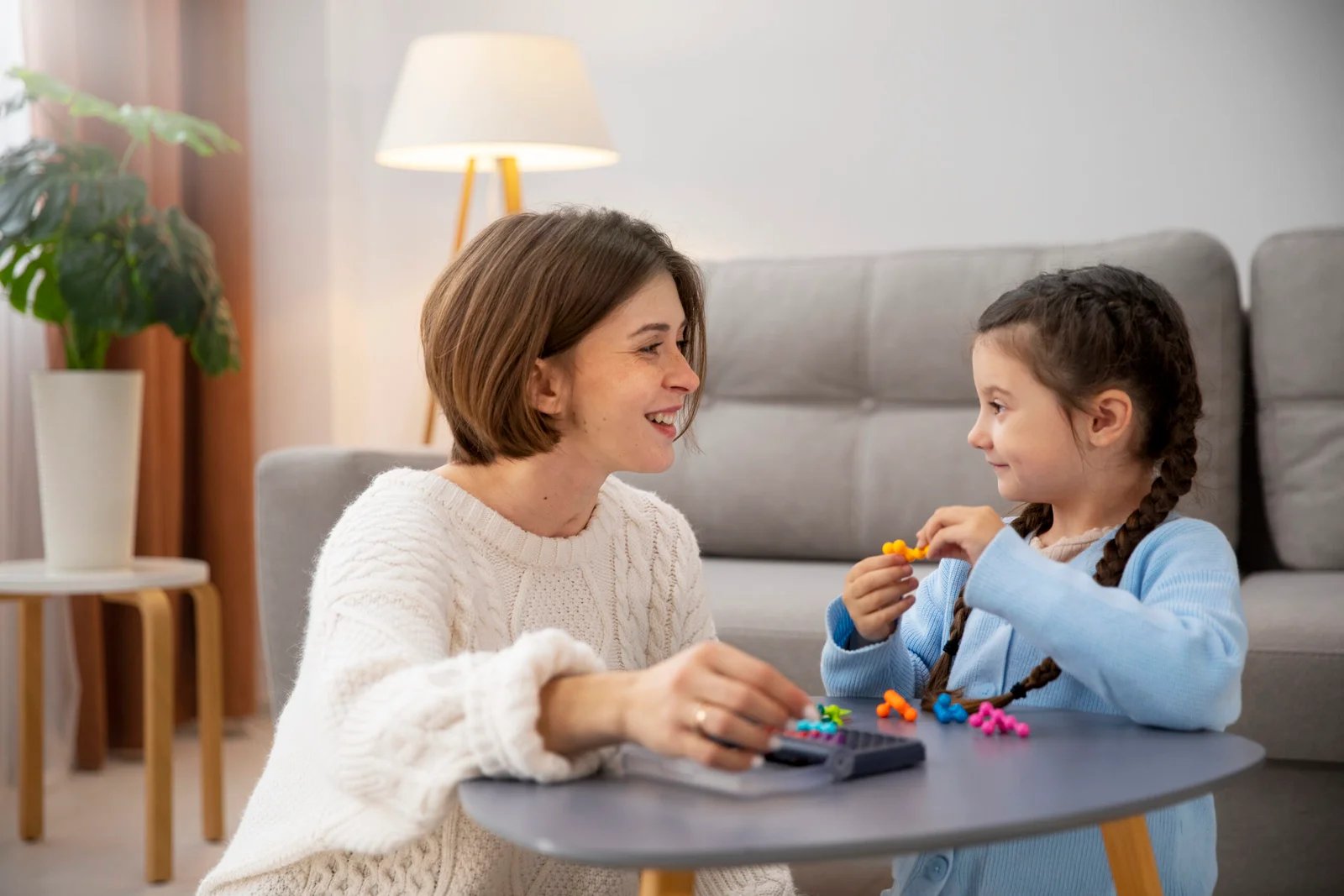
Social skills help children do much more than simply "get along" with others. They help a child start a conversation, understand non-verbal cues, wait for a turn, share attention, manage emotions, join group activities, respond to peers, and build relationships. When a child finds these situations difficult, Occupational Therapy (OT) can support social development by working on the underlying skills that make social participation easier - such as communication, sensory processing, emotional regulation, play, motor planning, and self-confidence. In this way, occupational therapy for social skills focuses not only on what a child says or does socially, but also on why social interaction may be difficult in the first place.
The Occupational therapy approach is especially relevant because social participation itself is considered a meaningful occupation. Occupational therapists look at how a child participates in real-life situations at home, school, during play, and in the community, rather than treating social skills as an isolated ability.
What Are Social Skills in Children?
Social skills are the abilities children use to communicate and participate with other people. They develop gradually through everyday interactions with parents, siblings, teachers, and peers.
Important social skills include:
- Verbal communication: using words to express needs, ideas, questions, and feelings.
- Non-verbal communication: understanding gestures, facial expressions, body language, and other social cues.
- Joint attention: sharing attention with another person toward the same object, activity, or event.
- Turn-taking and sharing: understanding that interaction involves both giving and receiving.
- Emotional regulation: managing excitement, frustration, disappointment, and other emotions during interaction.
- Social participation: joining play, classroom activities, conversations, and group situations.
- Flexible play: moving beyond repetitive or solitary play to participate in shared and imaginative activities.
These abilities are connected. For example, a child who becomes overwhelmed by noise may find it difficult to remain in a group. A child who struggles with emotional regulation may leave when a game does not go their way. Another child may want to interact but struggle to understand how to start a conversation.
This is why occupational therapy looks at the whole chain behind social participation rather than simply asking a child to "be more social."
How Does Occupational Therapy Improve Social Skills?
Occupational therapy can improve social skills by creating opportunities for children to practise communication, regulation, interaction, and participation within meaningful activities.
The therapist first considers the child's individual strengths and challenges. Therapy may then combine play-based activities, sensory strategies, social skills practice, emotional regulation techniques, role-play, group activities, and parent or teacher involvement.
The goal is not to make every child behave in the same way. The goal is to help the child participate more comfortably and successfully in the social situations that matter to them.
1. Occupational Therapy Builds Communication Skills
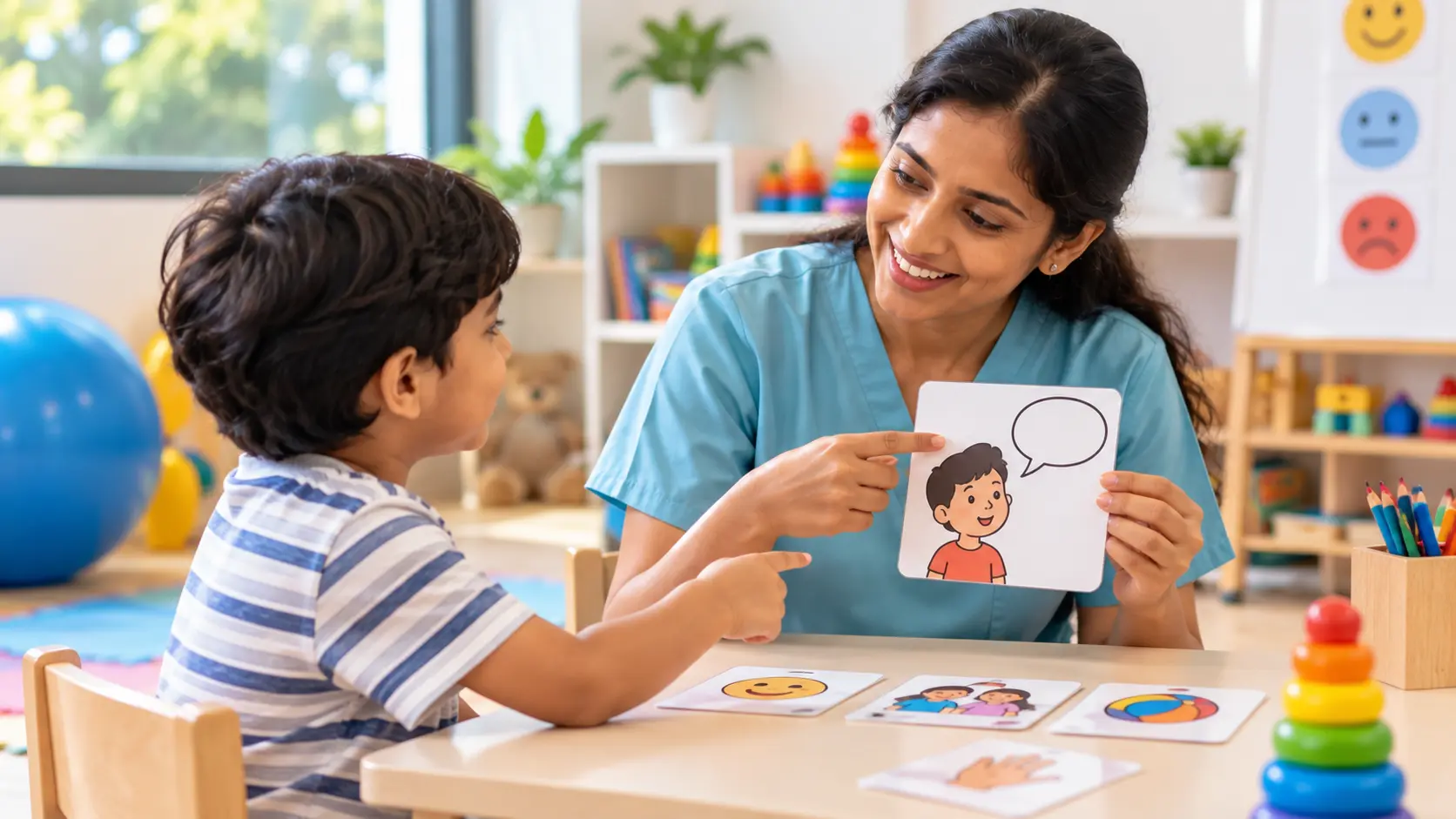
Communication is one of the foundations of social interaction. Some children may have difficulty starting conversations, answering questions, expressing what they want, or understanding what another person is trying to communicate. Communication can also involve much more than spoken language.
Occupational therapy may support:
- Starting and maintaining simple interactions
- Requesting help or expressing needs
- Responding to another person
- Using gestures and facial expressions
- Understanding basic social cues
- Following simple social routines
- Practising appropriate responses during play
For example, instead of simply asking a child to "talk to another child," an occupational therapist may create a structured game where the child needs to ask for a particular toy, wait for a response, and continue the activity. The social skill is therefore practised inside a meaningful activity, making it easier for the child to understand when and why the skill is useful.
2. It Develops Joint Attention
Joint attention is the ability to share attention with another person toward the same object or activity.
Imagine a child playing with a toy car. The child looks at the car, then looks at a parent, points toward it, and waits for the parent to respond. That simple exchange involves shared attention. Joint attention supports later social communication because children need to notice what another person is looking at, doing, or communicating before they can respond meaningfully.
Occupational therapy can encourage joint attention through:
- Shared games
- Turn-taking activities
- Interactive toys
- Imitation
- Shared storytelling
- Cooperative play
- Simple problem-solving activities
Research on occupational therapy interventions for autistic children has found evidence supporting joint-attention interventions as one approach that can improve social participation.
3. Sensory Processing Can Make Social Interaction Easier
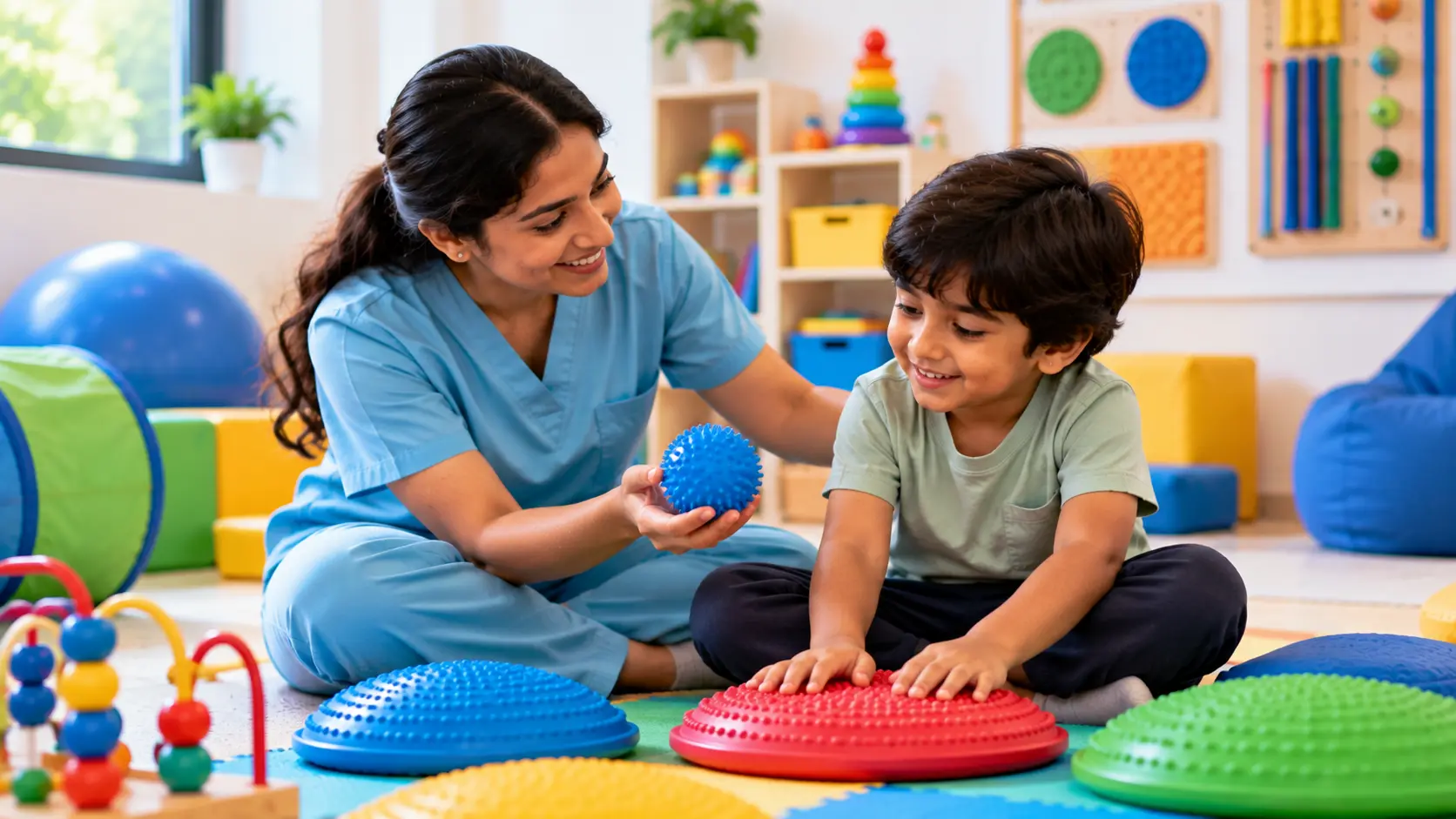
Social situations are full of sensory information. A classroom may contain voices, chair movements, bright lights, physical contact, and background noise. A playground may involve unpredictable movement and many children speaking simultaneously. For a child with sensory processing differences, this can become overwhelming.
When sensory overload occurs, a child may:
- Avoid group activities
- Cover their ears
- Become upset or frustrated
- Withdraw from others
- Have difficulty listening
- Leave the situation
- Experience a meltdown
This does not necessarily mean that the child does not want to interact. Sometimes, the environment is simply too difficult for the child to manage.
Occupational therapists can assess sensory processing patterns and introduce appropriate sensory strategies to help the child participate more comfortably. Sensory processing is closely connected with participation in play, learning, emotional regulation, and social activities. This is an important part of occupational therapy for social skills, because better regulation can create the foundation for better participation.
4. Occupational Therapy Supports Emotional Regulation
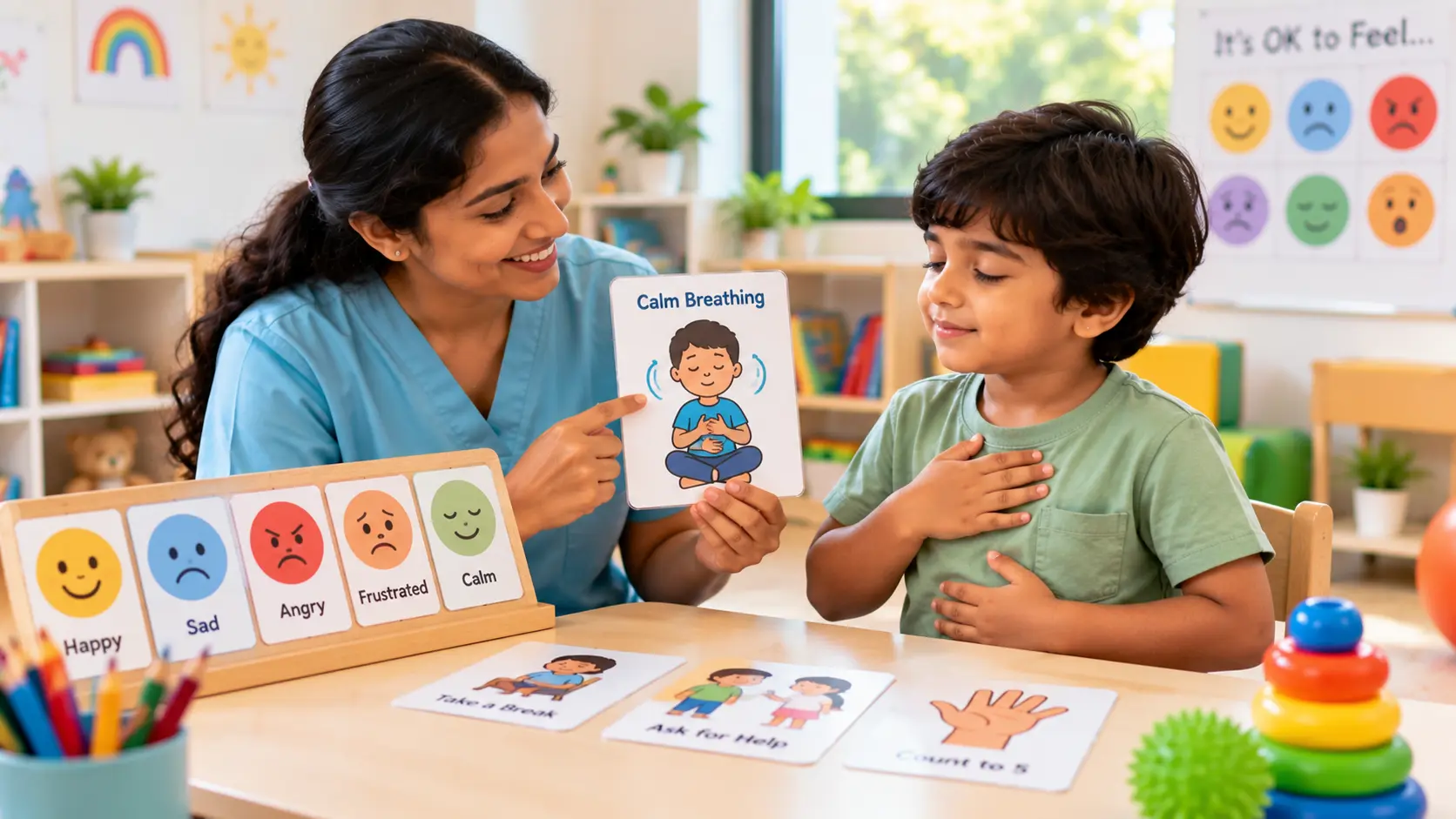
A child cannot always participate successfully in social interaction when emotions become overwhelming.
Consider a child who loses a board game and immediately becomes upset. Another child may become frustrated when a peer changes the rules. Some children may struggle when they have to wait, share, transition, or accept that another person has a different idea.
Occupational therapy can help children understand and manage these experiences by teaching them to:
- Recognise different emotions
- Identify early signs of frustration
- Use calming strategies
- Ask for help
- Take a break appropriately
- Handle small changes
- Wait for their turn
- Return to an activity after becoming upset
Over time, these skills can support emotional resilience and social participation.
5. Play Becomes a Natural Way to Practise Social Skills
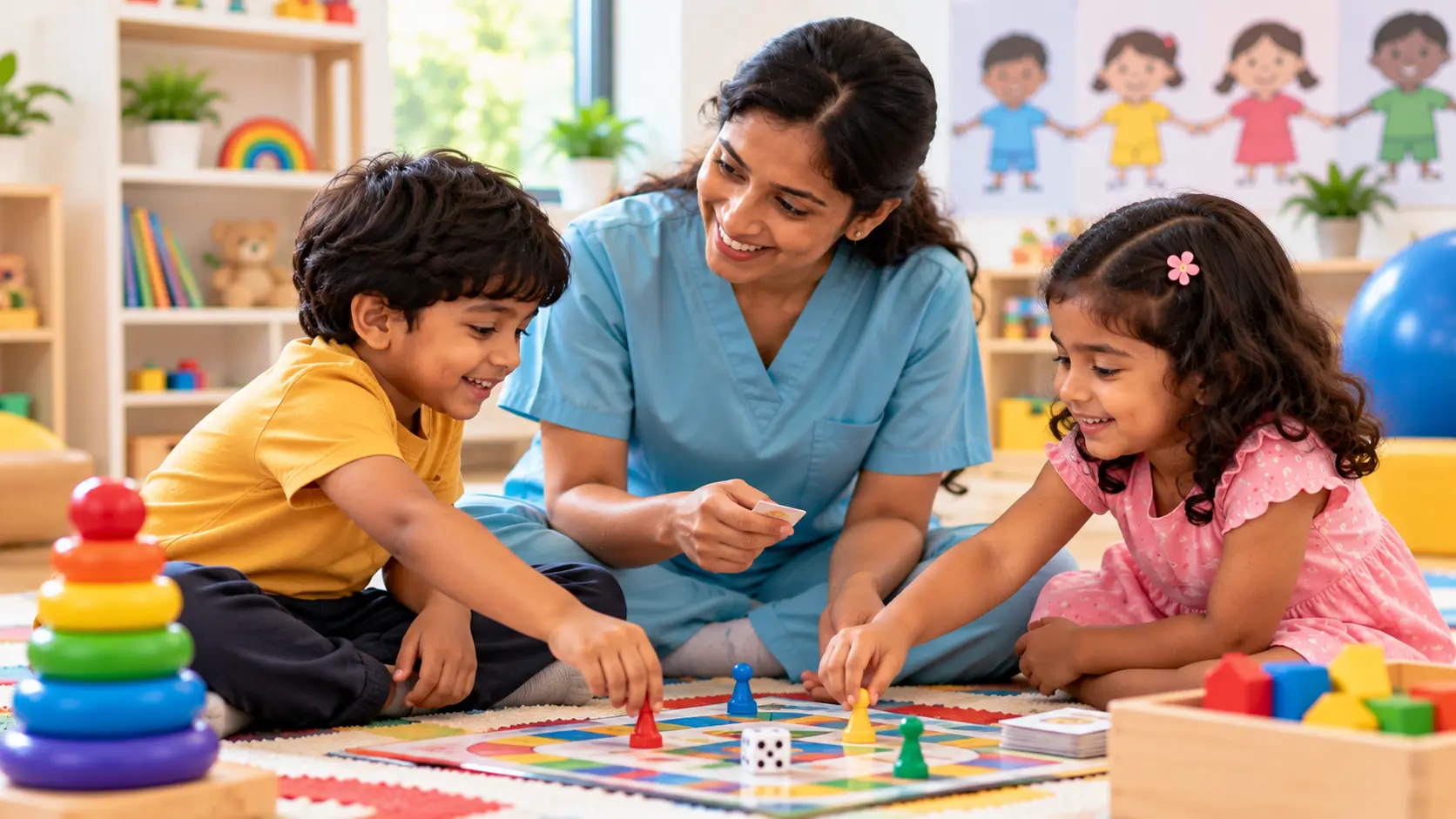
For children, play is one of the most natural ways to learn. Instead of sitting across from a therapist and answering a series of questions about social behaviour, a child can learn through activities that are enjoyable and meaningful.
Occupational therapists may use:
- Board games and cooperative games
- Pretend play
- Role-play
- Arts and crafts
- Shared storytelling
- Sensory-motor activities
- Construction and problem-solving games
For example, a cooperative board game can teach a child to wait, follow rules, tolerate losing, communicate with another player, and celebrate another person's success. That single activity can practise several social skills for children at the same time.
Recent research on play-based occupational therapy found moderate-to-strong evidence across most included studies for improvements in playfulness and social play among autistic children. A 2026 meta-analysis also reported improvements in social and play skills following play-based interventions in children with autism, although the researchers noted substantial differences between studies and recommended further high-quality research.
6. Role-Play Helps Children Practise Real-Life Situations
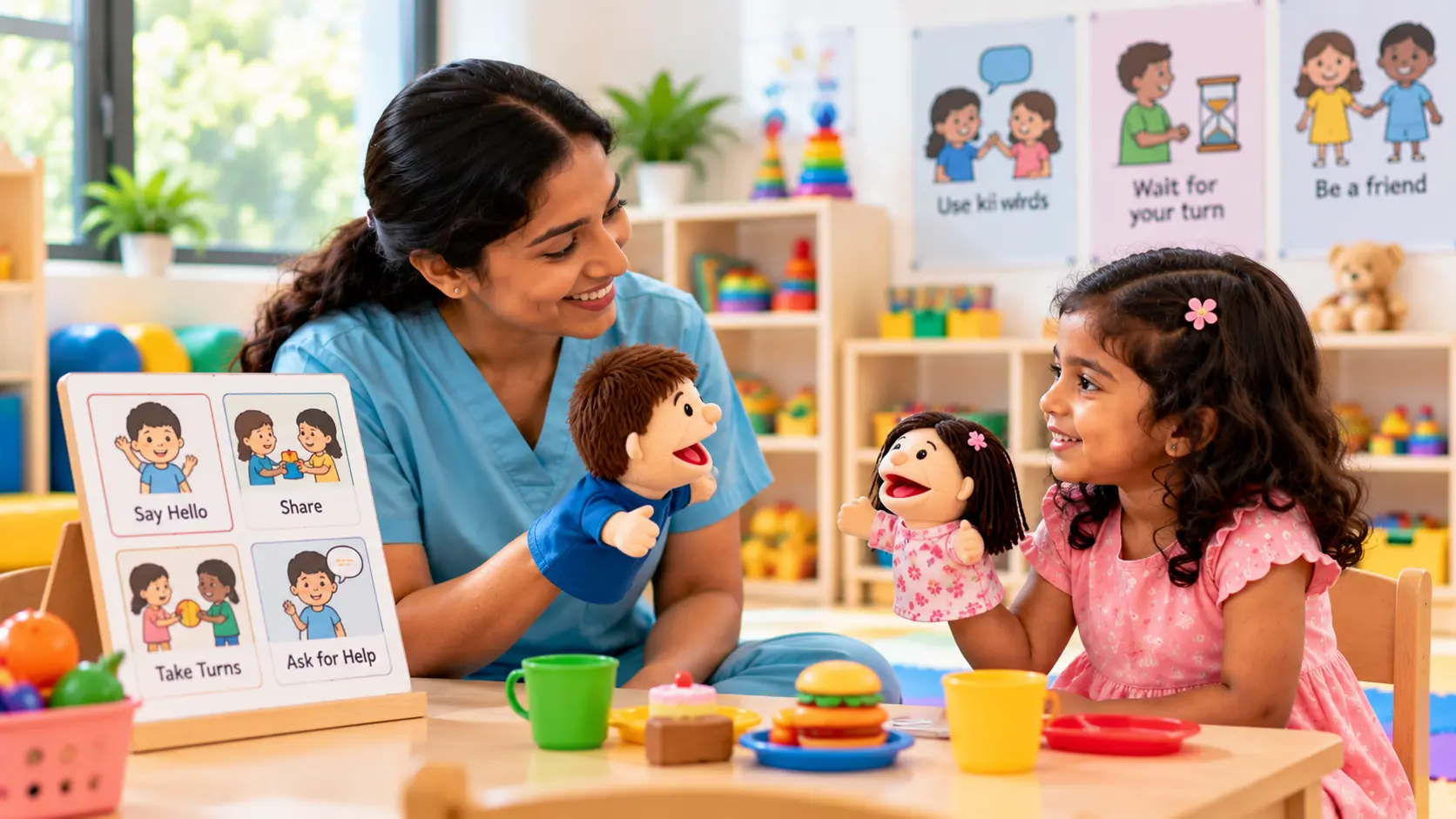
Some children understand social rules when an adult explains them but struggle to use those rules in real situations. Role-playing creates a bridge between understanding and doing.
A therapist may create situations such as: "Imagine another child wants to use the same toy. What could you say?" The child can then practise different responses.
Role-play can address situations such as:
- Starting a conversation
- Asking another child to play
- Sharing toys
- Waiting for a turn
- Asking for help
- Responding when someone says "no"
- Handling disagreements
- Joining a group activity
- Saying hello or goodbye
The therapist can gradually make the situation more natural and less structured as the child becomes more comfortable.
7. Social Stories Can Make Social Situations Easier to Understand
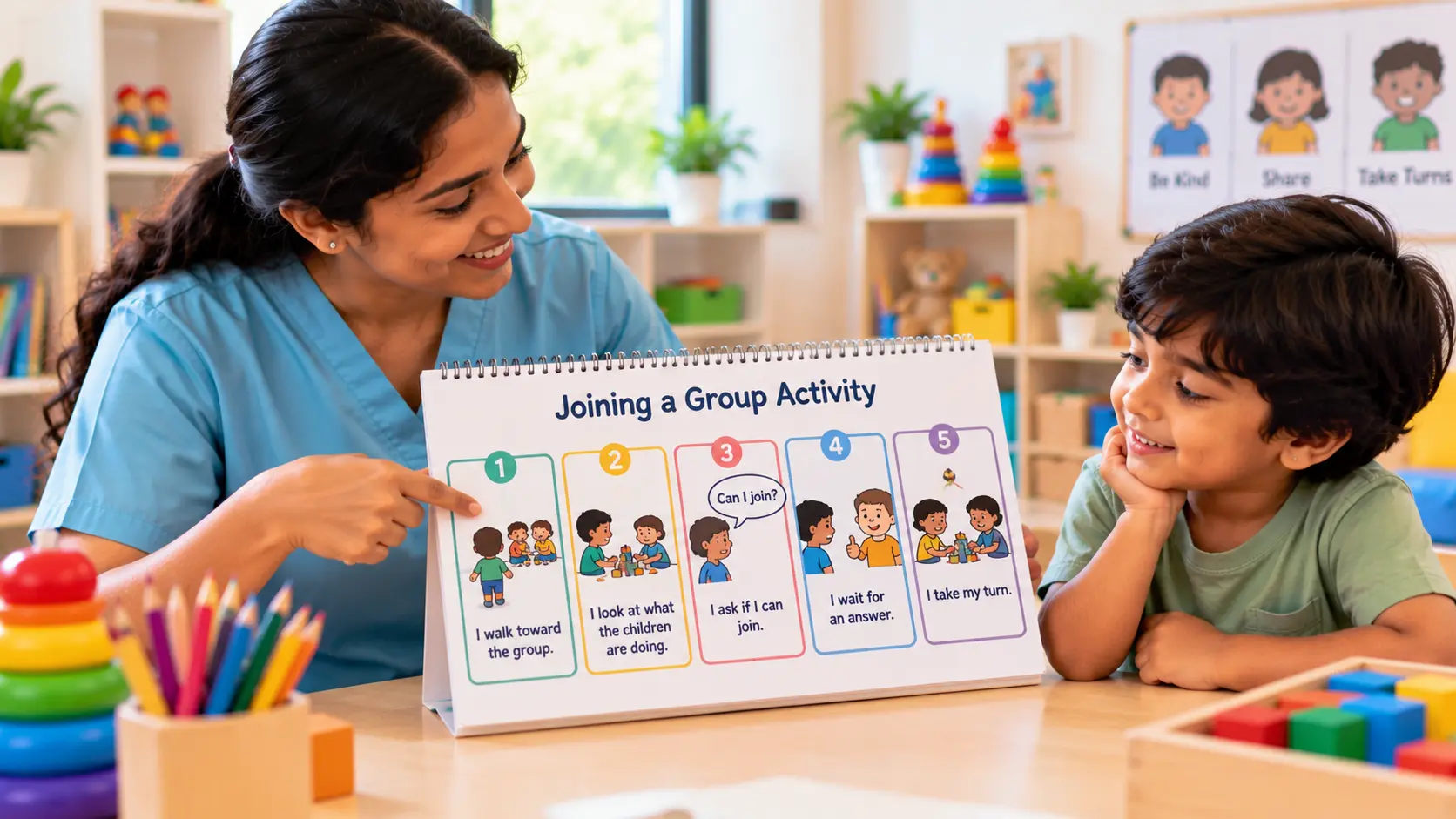
Some social situations are difficult because they contain many unwritten rules. A child may know what they want to do but not understand what usually happens next. Social Stories can break a situation into simple, predictable steps.
For example, a story about joining a classroom activity may explain:
- I walk toward the group.
- I look at what the children are doing.
- I ask if I can join.
- I wait for an answer.
- I take my turn.
This gives the child a mental framework before encountering the situation. Social Stories can be useful as part of a broader intervention plan, although research evidence for individual strategies varies, so therapists should select approaches according to the child's needs and the available evidence.
8. Group Therapy Creates Real Opportunities for Social Practice
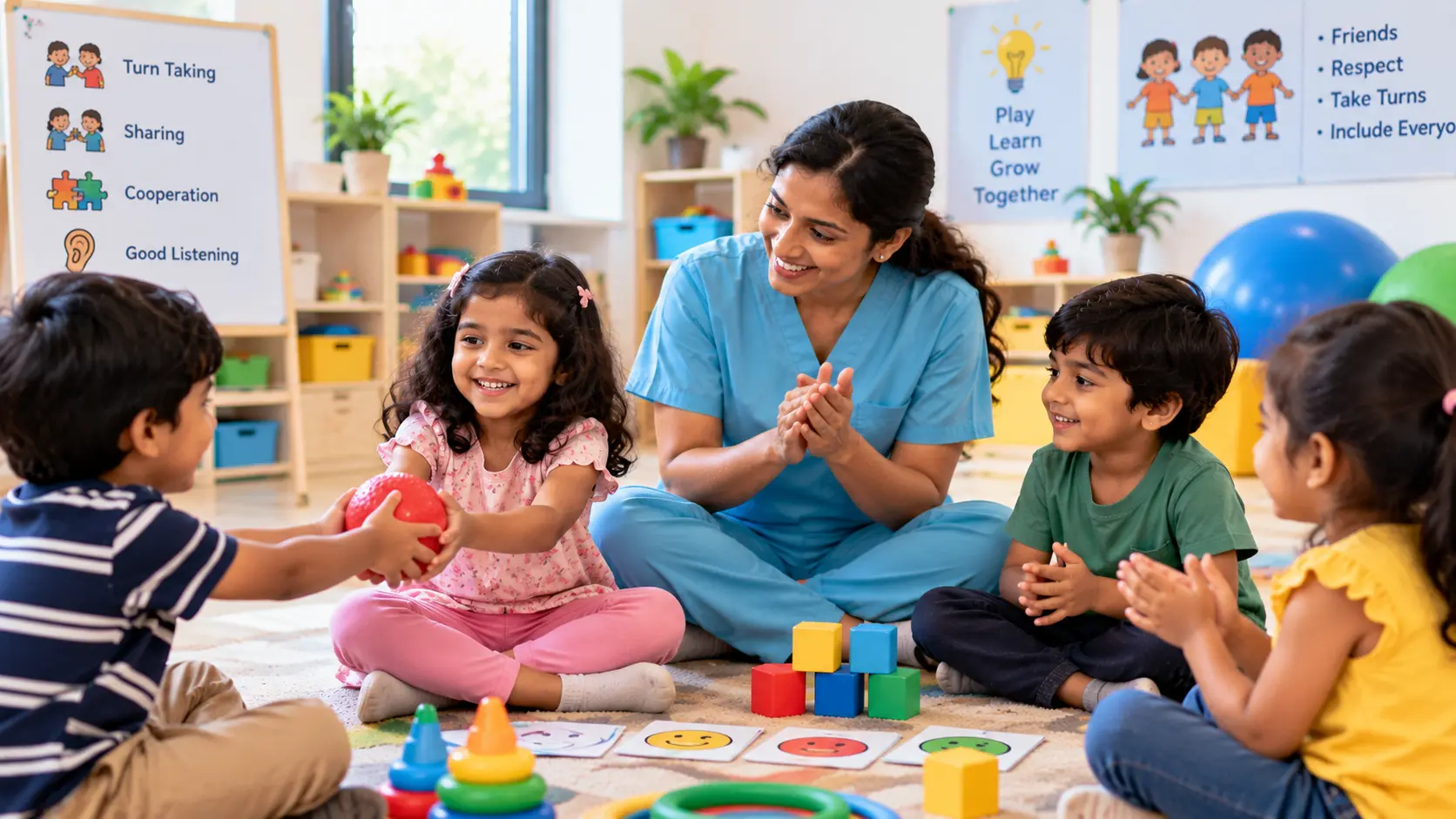
Individual therapy can teach specific skills, but children also need opportunities to use those skills with other people. This is where group therapy can become valuable.
A well-structured occupational therapy group can allow children to practise:
- Turn-taking and sharing
- Cooperation and listening
- Following group instructions
- Problem-solving
- Conversation skills
- Managing disagreements
- Participating in collaborative group activities
The therapist can observe how the child responds to real social situations and provide support when necessary. Evidence reviewed in occupational therapy literature supports group-based social skills training for improving social skills in autistic individuals, although intervention design and individual needs matter.
9. Occupational Therapy Can Improve Social Confidence
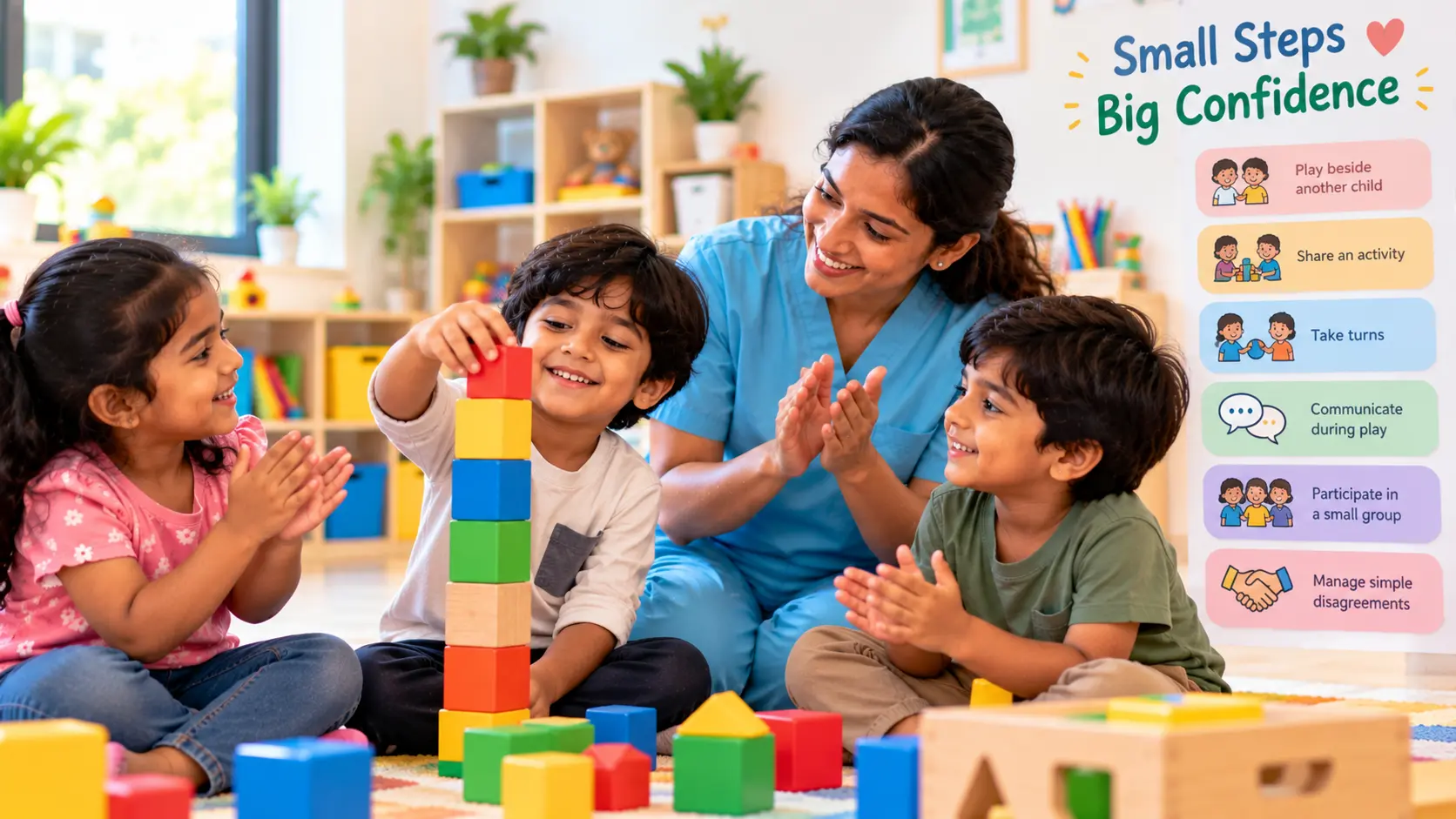
Social participation is not only about knowing what to do; a child also needs enough confidence to try.
Repeated difficulty with peers can make a child avoid social situations. Over time, this may reduce opportunities to practise and improve social skills. Occupational therapy creates smaller, achievable social experiences.
A child might first learn to play beside another child, share an activity, take turns, communicate during play, participate in a small group, and eventually manage simple disagreements. This gradual progression allows the child to experience success, fostering natural confidence.
10. Better Social Skills Can Support Independence
The purpose of occupational therapy is not limited to therapy-room performance. The larger goal is functional participation.
A child may use social skills to:
- Ask a teacher for help
- Participate in classroom activities
- Play with classmates
- Follow group routines
- Communicate needs
- Make choices
- Participate in family activities
- Handle everyday social situations
Therefore, progress may be seen not simply as "better social skills," but as greater functional independence and participation across home, school, and community settings.
Signs a Child May Benefit From Support for Social Skills
Every child develops differently, and one difficulty does not automatically mean that therapy is required. However, parents may consider professional evaluation when social challenges consistently interfere with everyday participation.
Some possible signs include:
- Trouble starting or maintaining conversations
- Limited use of eye gaze or other non-verbal cues
- Difficulty joining other children in play
- Avoiding social situations
- Difficulty sharing or taking turns
- Frequent conflicts with peers
- Difficulty understanding social boundaries
- Becoming overwhelmed during group activities
- Strong emotional reactions when routines or games change
- Difficulty participating in cooperative play
These signs should be understood in the context of the child's overall development rather than viewed in isolation.
Occupational Therapy for Social Skills: What Does a Session Look Like?
There is no single occupational therapy session that works for every child. A therapist begins by understanding the child's participation at home, school, and in social situations. The intervention is then shaped around the child's strengths, needs, interests, sensory profile, communication abilities, and goals.
Sensory regulation → Communication practice → Shared play → Turn-taking → Emotional regulation → Problem-solving → Social interaction
For example, a child who becomes overwhelmed in group play may first work on regulation, then participate in a simple sensory-motor activity, followed by a cooperative game requiring turn-taking and communication. This creates a meaningful progression rather than treating every skill in isolation.
The Role of Parents, Teachers, and Other Professionals
Social development does not happen only inside the therapy room. Children need opportunities to practise skills in the environments where they live and learn. Collaborative support systems are vital:
- Parent coaching and involvement: Parents reinforce social skills during everyday routines, family games, and community outings.
- School environment adaptations: Teachers and therapists collaborate on classroom adjustments - including routine structures, sensory demands, instructions, seating, or peer interaction opportunities.
- Home-based routine reinforcement: Skills become durable when children practise them naturally in daily living routines.
- Multidisciplinary collaboration: Occupational therapists work alongside speech-language therapists, psychologists, special educators, physiotherapists, and teachers. At Gratus Kids, we bring together multidisciplinary care to address speech, behaviour, sensory integration, and motor skills holistically.
What Are the Benefits of Occupational Therapy for Social Skills?
When therapy is matched to an individual child's needs, addressing the underlying factors of social participation leads to wide-ranging developmental progress:
- Increased social confidence and reduced withdrawal
- Better peer relationships and mutual play
- Improved verbal and non-verbal communication
- Greater participation in group settings and classrooms
- Better emotional regulation and frustration tolerance
- Improved tolerance of varied sensory and social environments
- Greater functional independence across everyday routines
- Strengthened emotional resilience when encountering conflicts
Occupational Therapy Is About Participation, Not Just "Social Behaviour"
One of the most important concepts for parents to understand is that social skills do not exist separately from the rest of development.
A child may struggle with social interaction because communication is difficult, sensory input is overwhelming, emotions run high, or they simply do not know how to join an existing game. This is why occupational therapy takes a whole-child perspective. Rather than telling a child to "talk more" or "make friends," OT asks: What is making participation difficult, and what skills or environmental changes could make participation easier?
When Should Parents Consider Occupational Therapy?
Parents do not need to wait for social difficulties to become severe before seeking guidance. If a child consistently finds it challenging to communicate, join play, manage sensory inputs, regulate emotions, or participate in everyday social activities, an occupational therapy evaluation can clarify the root causes.
Early support equips children with real-world strategies while helping families create supportive home and school environments. For a child, progress might look like joining a game, waiting for a turn, asking a peer to play, or staying calm during an unexpected transition - small milestones that unlock life-long connection and confidence.
Expert Clinical Opinion of Dr. Dheeraj on Social Participation
"Children rarely avoid social interaction out of a lack of interest in other children; often, the sensory demands and social expectations of group settings simply overwhelm their current regulation capacities. When we provide children with the sensory balance, communication scaffolding, and emotional tools they need, social participation transitions from an anxious demand into an enjoyable, rewarding experience."