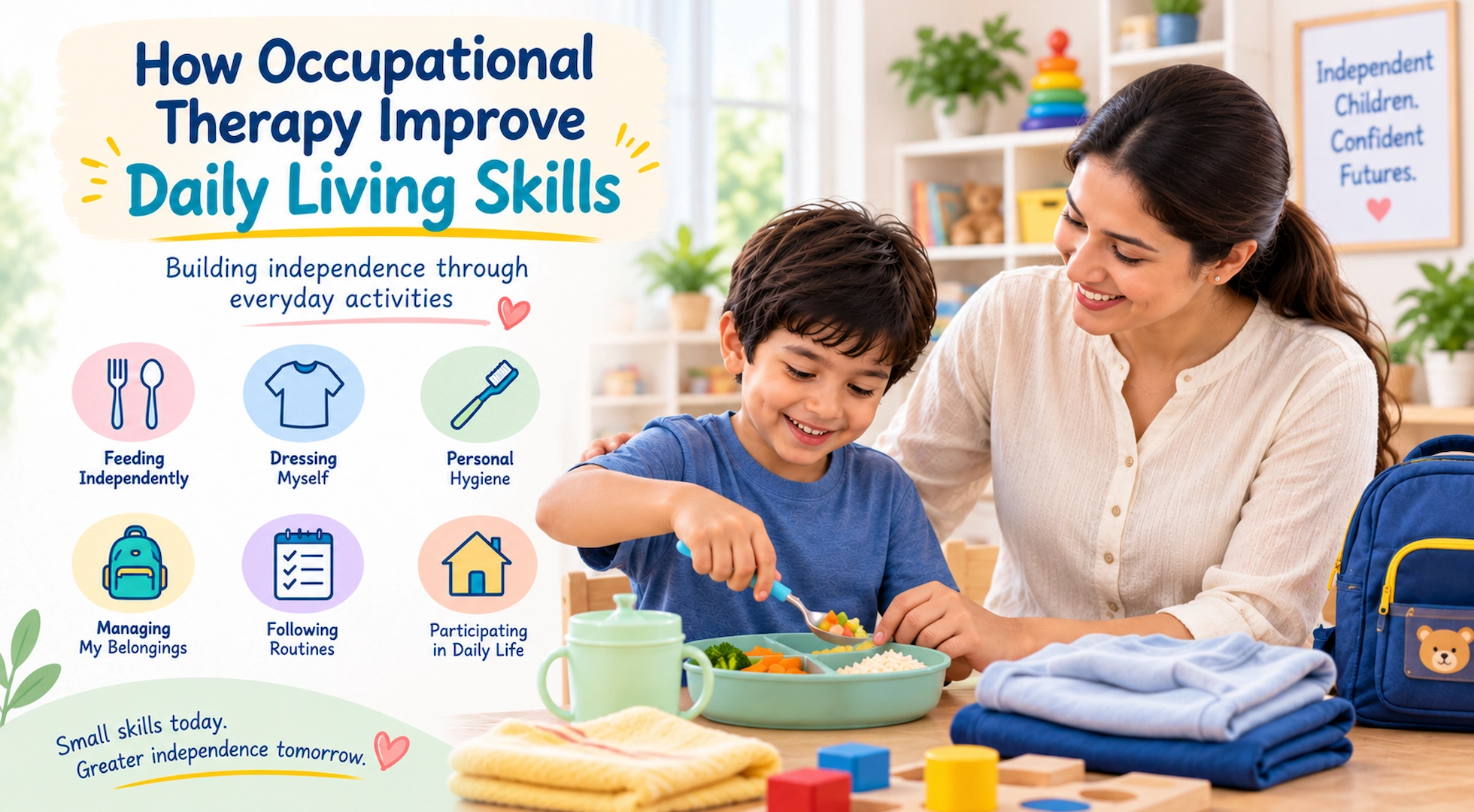
Occupational Therapy improves daily living skills by helping a child perform everyday activities with greater independence, safety, confidence, and participation. These activities can range from personal hygiene, dressing, eating, and toileting to meal preparation, household tasks, communication, community participation, school activities, and work.
Rather than focusing only on a particular diagnosis or physical difficulty, occupational therapy looks at what a child needs or wants to do in real life and what is preventing them from doing it effectively. This occupation-focused approach is central to modern occupational therapy practice.
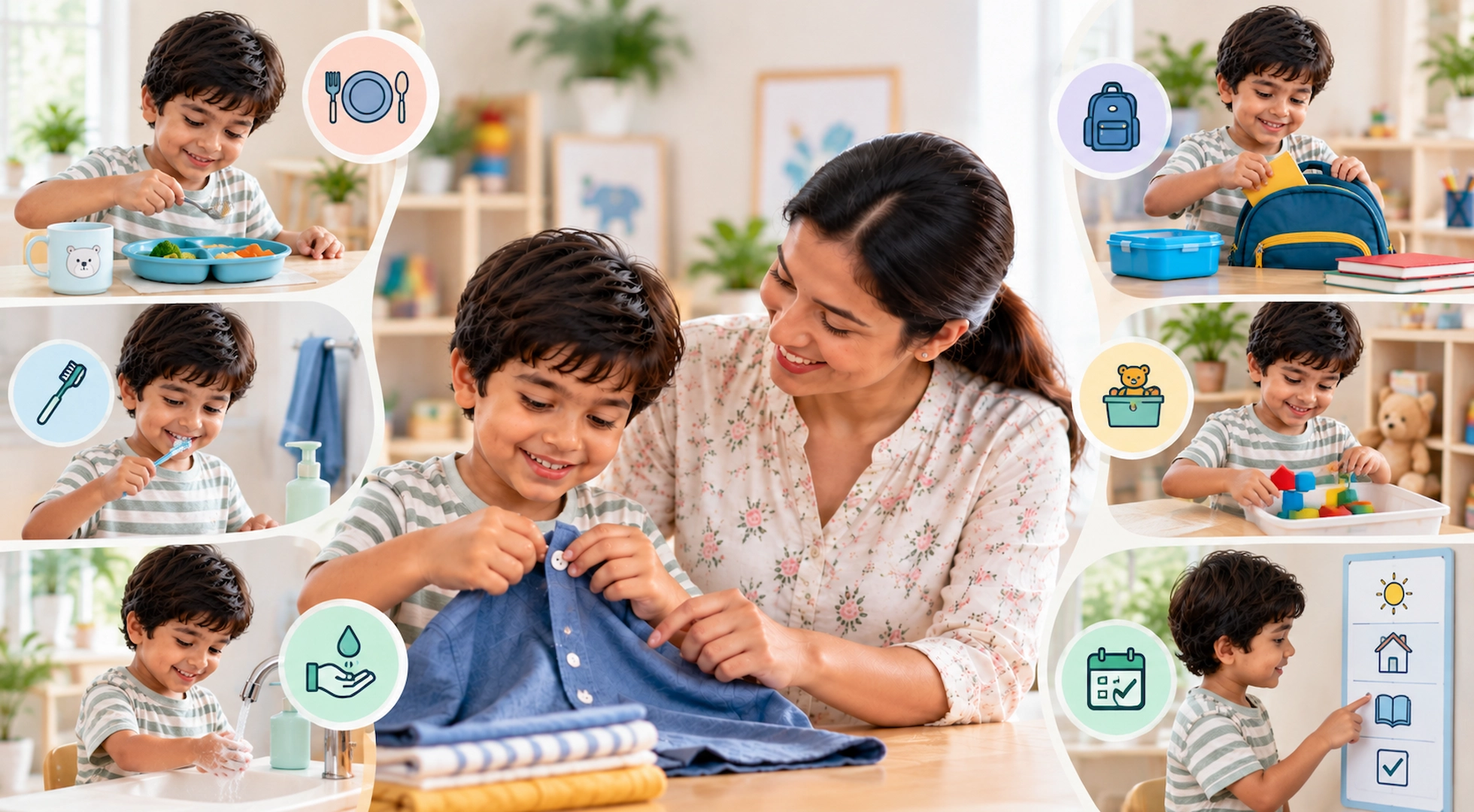
For a child, this may mean learning to dress independently, use a spoon, brush teeth, manage school materials, or follow a daily routine.
The goal is not simply to make a child better at therapy exercises. The goal is to help the child function better in everyday life.
What Are Daily Living Skills?
Daily living skills are the practical abilities children use to take care of themselves, manage responsibilities, participate in their environment, and live as independently as possible.
In occupational therapy, these activities are commonly understood through Activities of Daily Living (ADLs) and Instrumental Activities of Daily Living (IADLs). The broader occupational therapy framework also considers education, work, play, leisure, social participation, and health management.
Activities of Daily Living (ADLs)
ADLs are the fundamental self-care activities an individual performs regularly. They include:
- Personal hygiene and bathing
- Dressing and grooming
- Self-feeding
- Toileting and continence
- Functional mobility
- Oral care and other personal-care routines
For children, these skills develop gradually. A child may first need help with dressing or feeding and later learn to complete individual steps independently.
Instrumental Activities of Daily Living (IADLs)
IADLs are more complex activities required to manage everyday life and participate in the home and community.
As children become older, their daily responsibilities gradually expand beyond basic self-care. They begin participating in age-appropriate household routines, organising school materials, preparing simple foods, managing belongings, communicating their needs, and navigating familiar environments.
They can include:
- organising school supplies
- packing a school bag
- helping prepare simple meals
- tidying toys
- completing household routines
- following schedules
- managing personal belongings
- communicating needs
- navigating familiar community environments
These activities require more than physical ability. They often involve planning, memory, attention, sequencing, problem-solving, and adapting to changing situations. Occupational therapists therefore consider both physical and cognitive abilities when addressing functional independence.
How Does Occupational Therapy Improve Daily Living Skills?
Occupational therapy improves daily living skills through a combination of assessment, skill development, task practice, environmental changes, adaptive equipment, sensory strategies, cognitive strategies, and caregiver support.
The approach is individualised because two people can experience difficulty with the same activity for completely different reasons. One child may struggle to dress because of poor fine motor coordination, while another may understand the task but become overwhelmed by clothing textures.
Occupational therapists identify these underlying barriers and build intervention around meaningful everyday activities.
Building Physical and Motor Skills
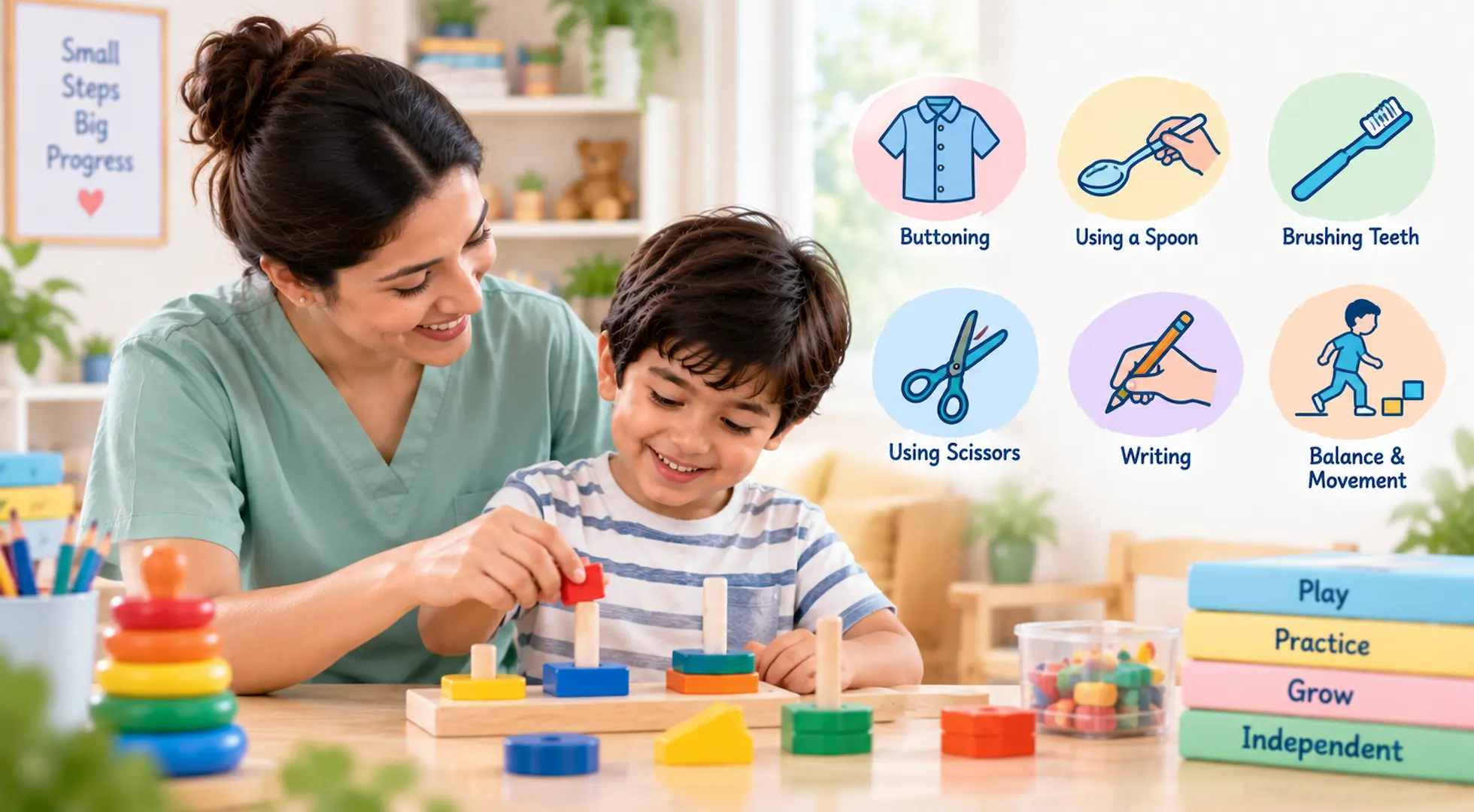
Many daily living activities depend on coordinated movement.
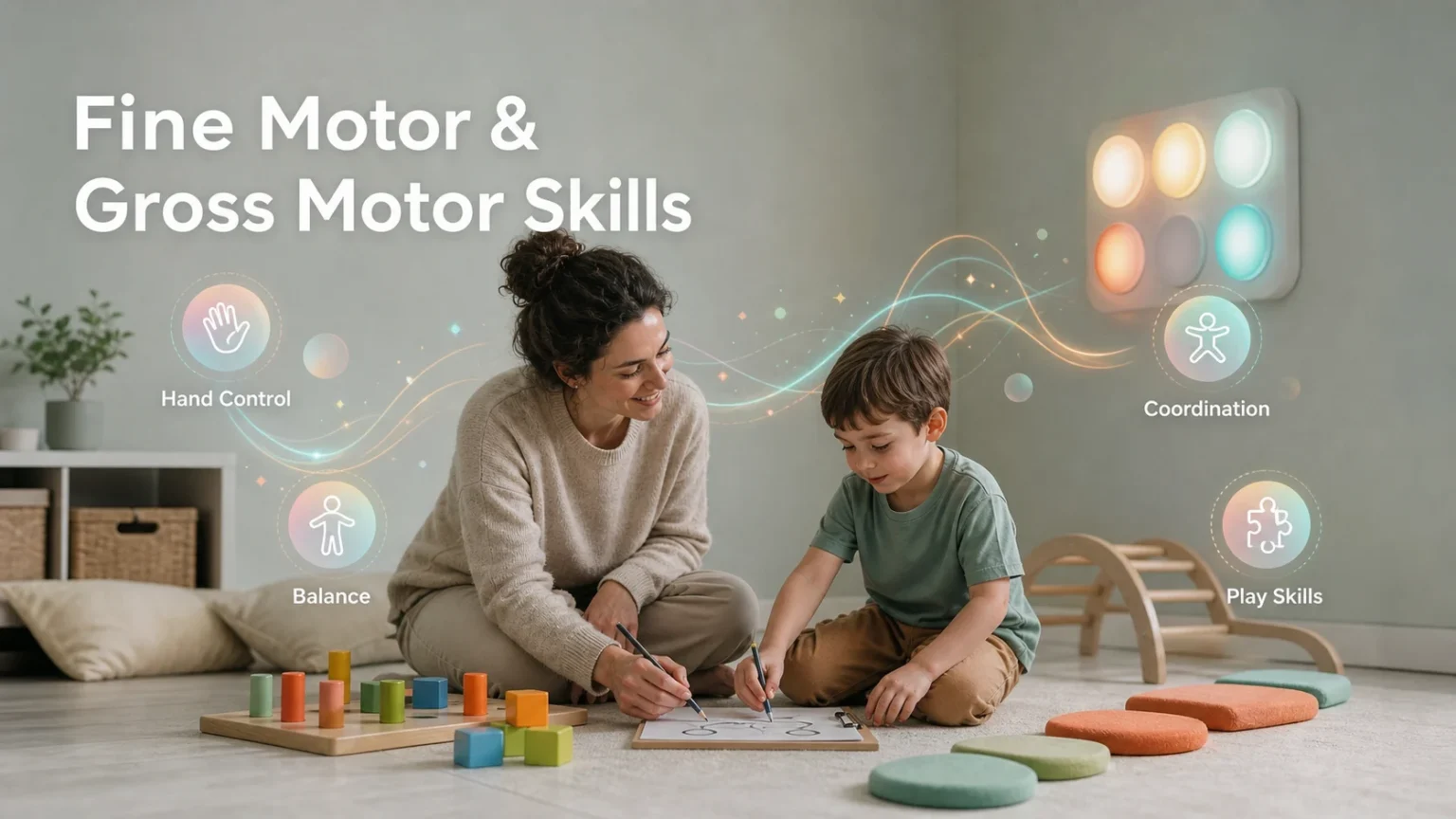
Buttoning a shirt, holding a spoon, opening a container, brushing teeth, using scissors, writing, transferring from a chair, or carrying objects all require different combinations of fine motor skills, hand function, coordination, strength, dexterity, balance, and motor planning.
Occupational therapists assess how these skills affect actual task performance rather than looking at movement in isolation.
For example, therapy may work on:
- Fine motor precision
- Hand - eye coordination
- Hand strength and dexterity
- Bilateral coordination
- Postural stability
- Functional mobility
- Energy conservation
The important connection is between the underlying skill and the real-world task.
A child may strengthen hand muscles through play and then use those improved skills to hold a pencil, fasten buttons, or use a spoon.
Strengthening Cognitive and Executive Functions
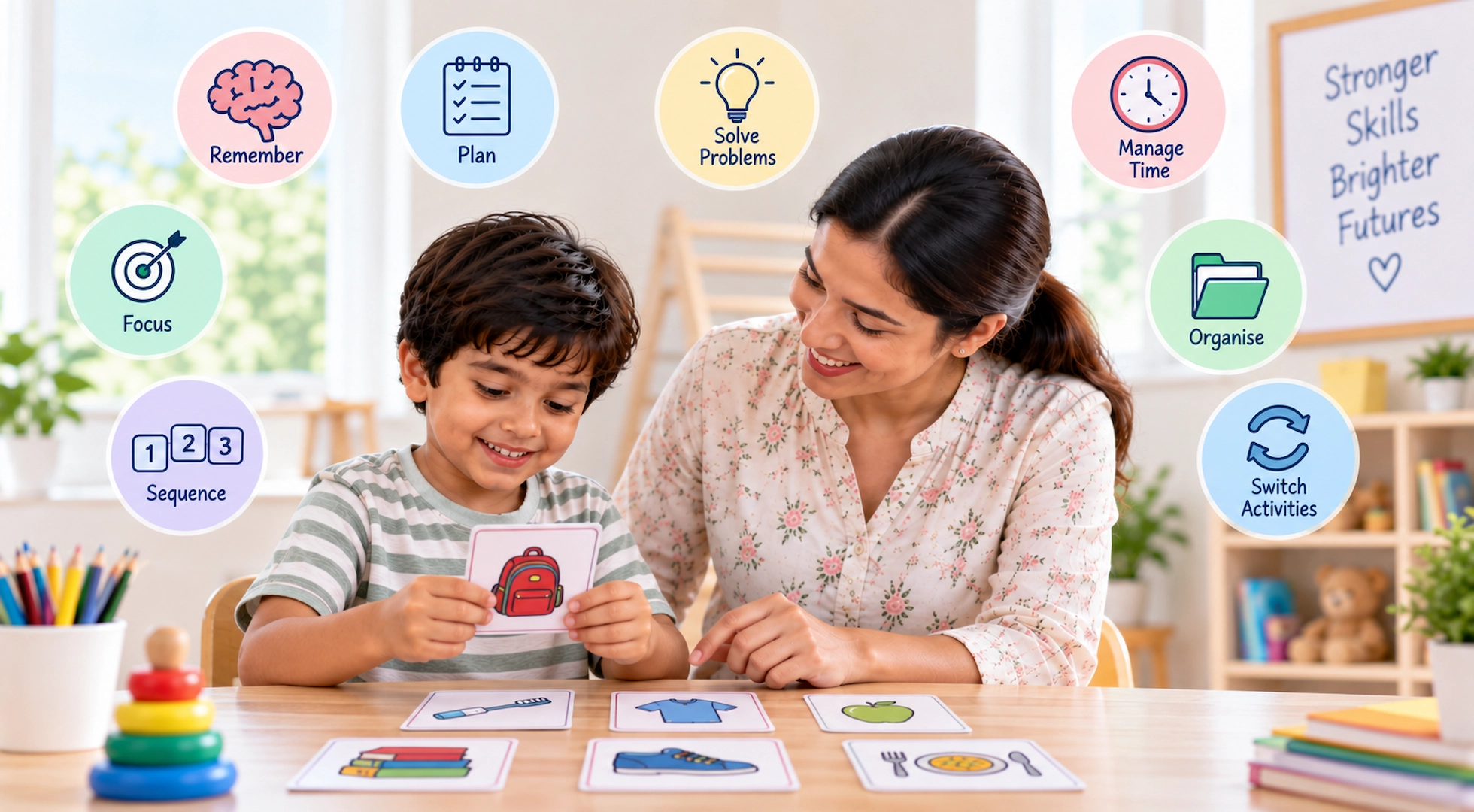
Daily living is not only physical. Many everyday activities require the brain to remember, organise, plan, sequence, focus, make decisions, and solve problems.
Consider something as simple as preparing breakfast. An individual needs to remember what is required, gather ingredients, follow steps in the correct order, manage time, notice safety concerns, and adjust if something does not go according to plan.
Occupational therapy can address these areas through functional cognition - the ability to use cognitive and executive functions while performing real-life activities.
Therapeutic strategies may support:
- remembering instructions
- following sequences
- completing morning routines
- organising school materials
- managing time
- shifting from one activity to another
- solving simple problems
- staying focused on a task
For children, these skills can support classroom participation, homework routines, organising school materials, and completing self-care sequences.
A child may know how to brush their teeth but still need repeated reminders because they have difficulty remembering the sequence or staying focused long enough to complete the routine.
Supporting Sensory Processing and Regulation
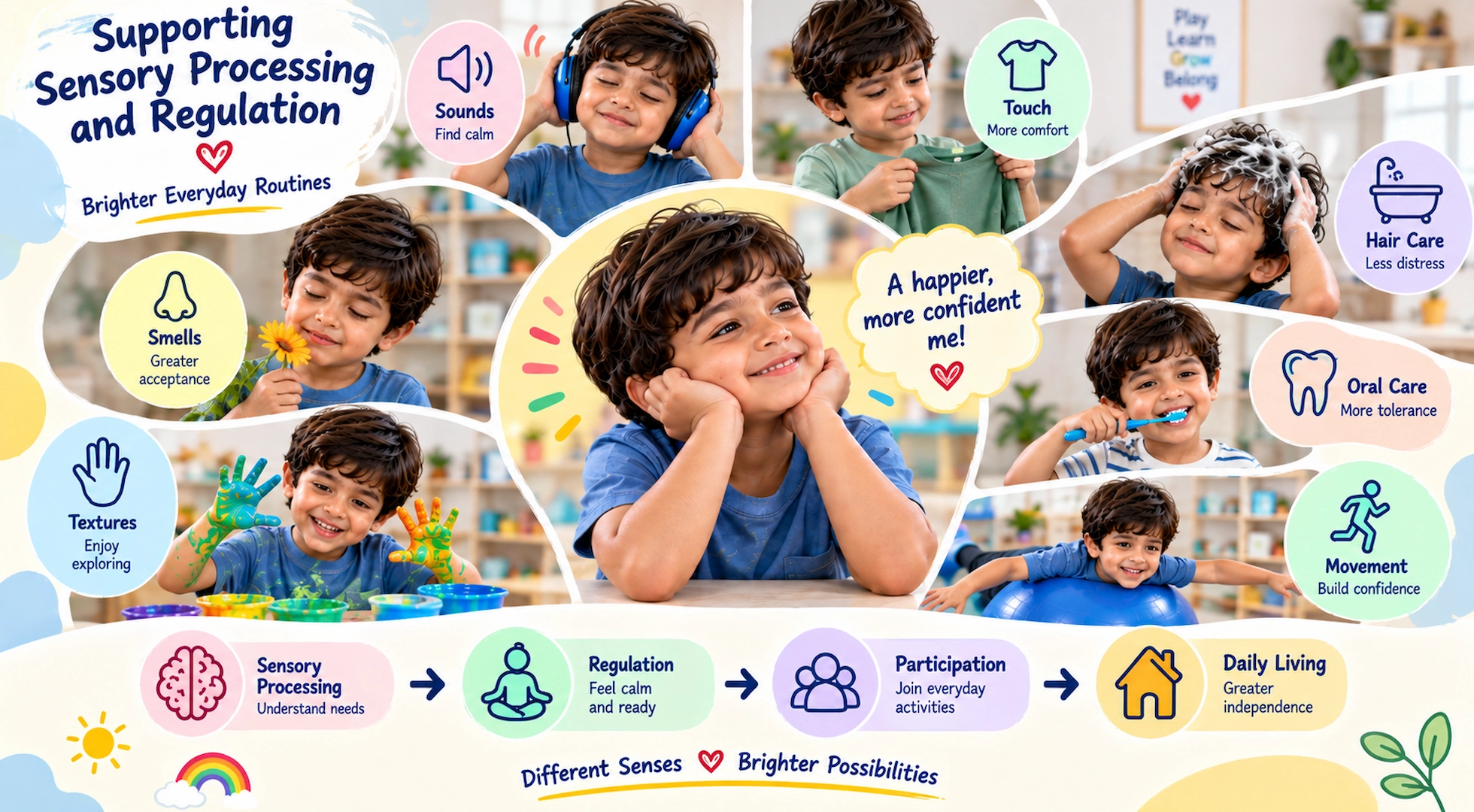
Sensory processing can influence how comfortably a child participates in everyday routines. Some children may be sensitive to touch, sounds, textures, movement, smells, or other sensory experiences. This may lead them to avoid certain clothes because of the fabric, become upset during hair washing, resist tooth brushing or nail trimming, dislike messy play, or feel overwhelmed in busy and noisy environments.
When sensory processing difficulties interfere with everyday occupations, occupational therapy can help identify the child’s sensory needs and introduce appropriate strategies that support regulation, participation, and independence.
Sensory-focused occupational therapy may support:
- Sensory integration and processing
- Self-regulation and emotional regulation
- Attention and participation
- Tolerance of everyday sensory experiences
- Transitions between activities
- Comfort and independence during daily routines
The goal is not simply to provide sensory activities. It is to help the child regulate their responses, participate more comfortably, and engage more successfully in meaningful daily occupations.
The Functional Pathway: Sensory processing → regulation → participation → independence
Making Self-Care More Independent
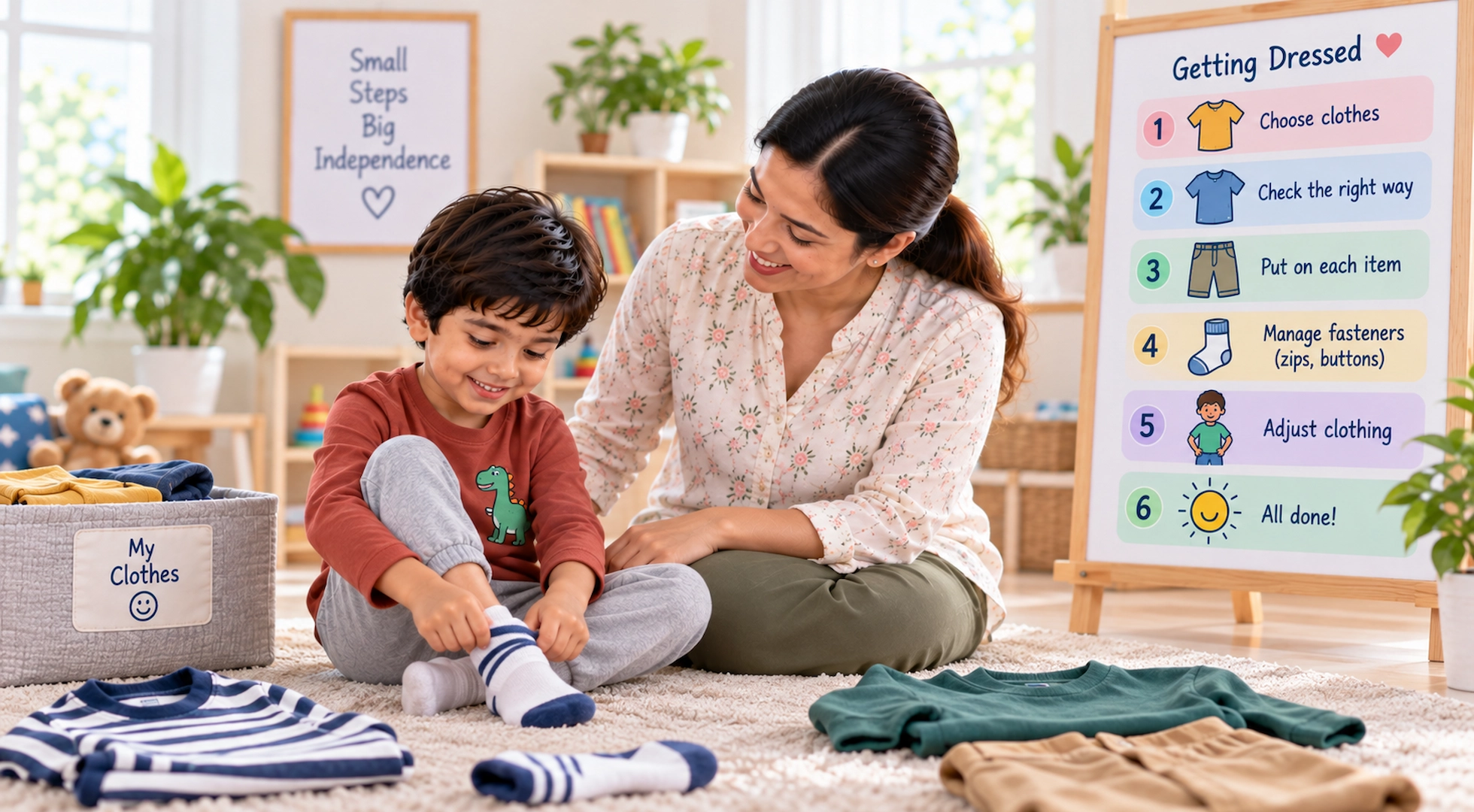
One of the most visible ways occupational therapy improves daily living skills is through self-care.
A child who needs constant assistance with dressing, feeding, bathing, or toileting may gradually learn to complete more of the task independently when the activity is broken into manageable steps.
For example, instead of simply teaching a child to "get dressed," an occupational therapist may look at the complete sequence:
The therapist can then identify exactly where the difficulty occurs.
Improving Meal Preparation and Household Skills
Daily living skills extend beyond personal care.
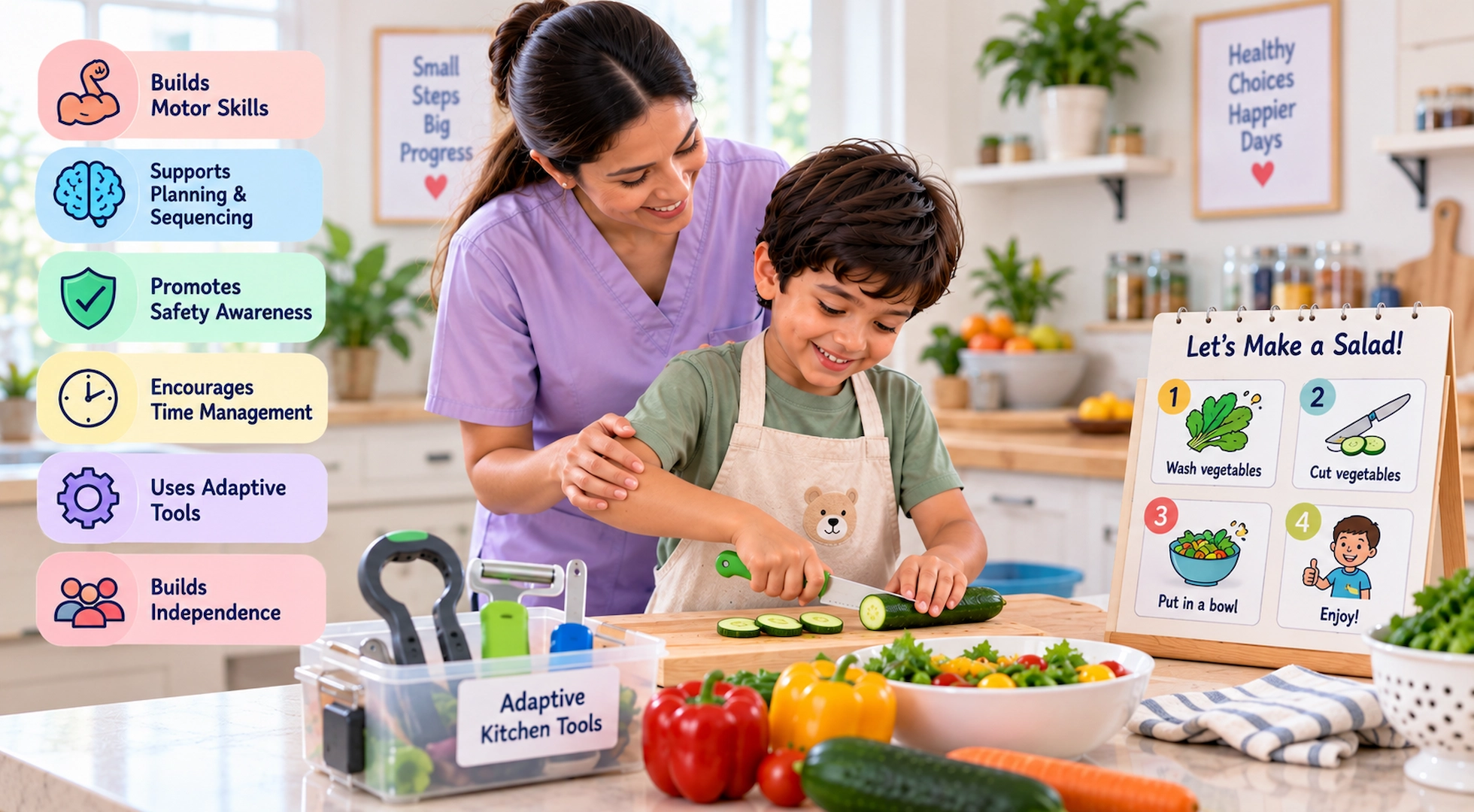
Meal preparation and household tasks require a combination of motor skills, cognition, sequencing, safety awareness, sensory processing, and time management.
Occupational therapy can help an individual approach these activities in a more manageable way. Depending on the individual's needs, intervention may involve practising specific steps, changing how a task is organised, introducing visual prompts, or recommending appropriate equipment.
For example, someone with reduced hand function may benefit from adapted kitchen tools. Someone with memory difficulties may use written or visual reminders. Someone with reduced endurance may learn energy-conservation techniques and reorganise frequently used items.
The focus remains functional: How can this individual complete the task more safely and independently?
Using Adaptive Equipment to Make Tasks Easier
Occupational therapy does not always mean teaching a child to perform a task in exactly the same way as someone else.
Sometimes the most effective solution is to change the tool or method.
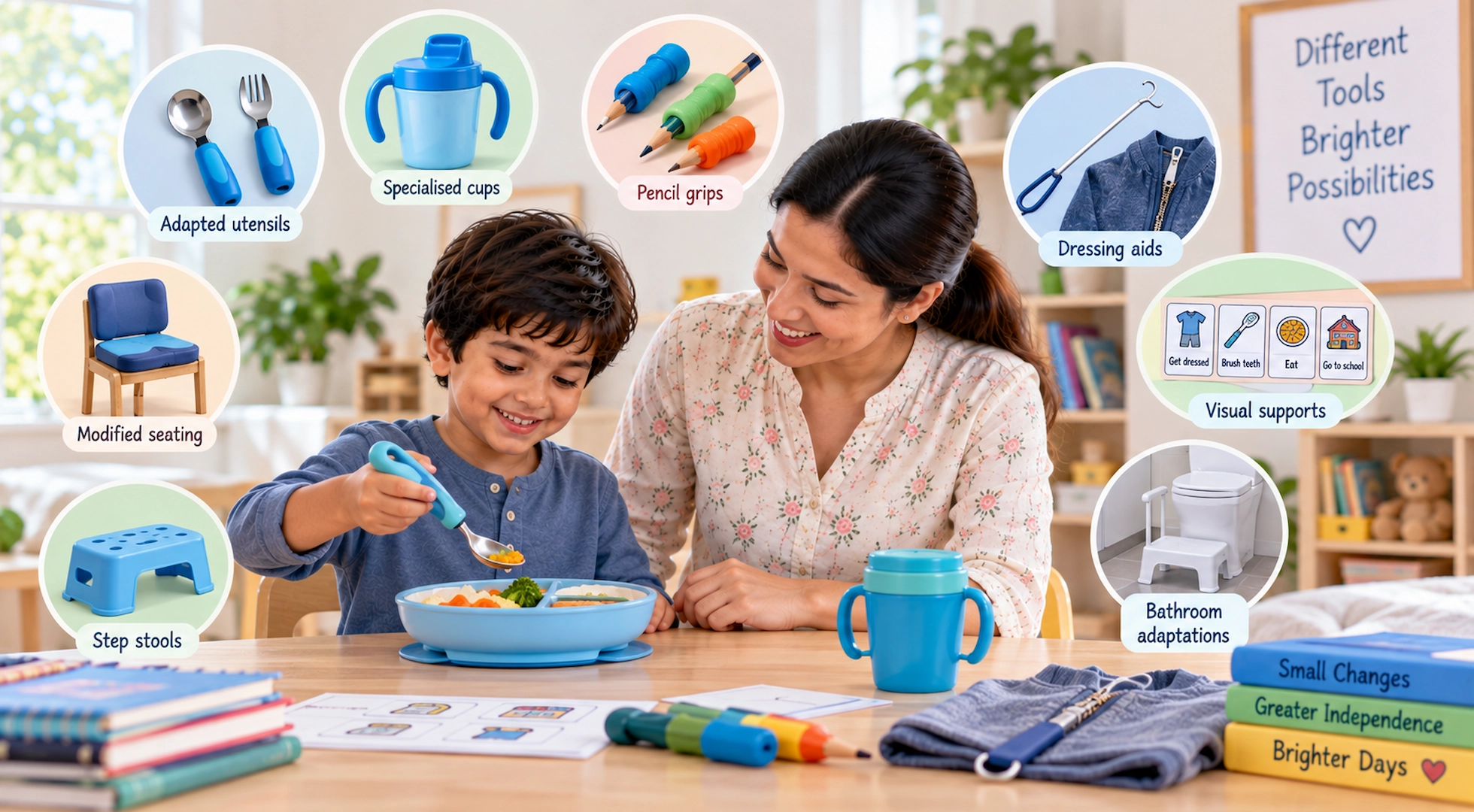
Adaptive equipment may include items such as:
- built-up handles
- adapted spoons
- specialised cups
- pencil grips
- dressing aids
- modified seating
- visual supports
- step stools where appropriate
- bathroom adaptations
Adaptive equipment isn't about making a child dependent. It can provide the right amount of support so the child can participate more successfully.
The appropriate equipment depends on the individual's specific needs and environment. Occupational therapists can recommend adaptive equipment when it can make daily activities safer, easier, or more achievable.
For children, simple adaptations can sometimes make a major difference. A modified utensil, pencil grip, seating arrangement, or dressing aid may reduce unnecessary difficulty and allow the child to participate more successfully.
Adapting the Environment
Sometimes the difficulty is not entirely within the individual. The environment itself can create barriers.
A crowded workspace, unsuitable seating, inaccessible bathroom, poor organisation, excessive sensory stimulation, or lack of visual structure can make everyday activities harder.
Occupational therapists consider these environmental factors as part of the assessment and may recommend modifications to improve participation.
Environmental modifications may include:
At Home
- organising frequently used items
- creating predictable routines
- reducing unnecessary distractions
- arranging accessible self-care materials
At School
- appropriate seating
- desk positioning
- visual schedules
- classroom organisation
- accessibility
- reducing unnecessary sensory distractions
This reflects one of the important principles of occupational therapy: independence can be improved by changing the individual, changing the task, changing the environment, or combining all three.
Supporting Motor Planning and Coordination
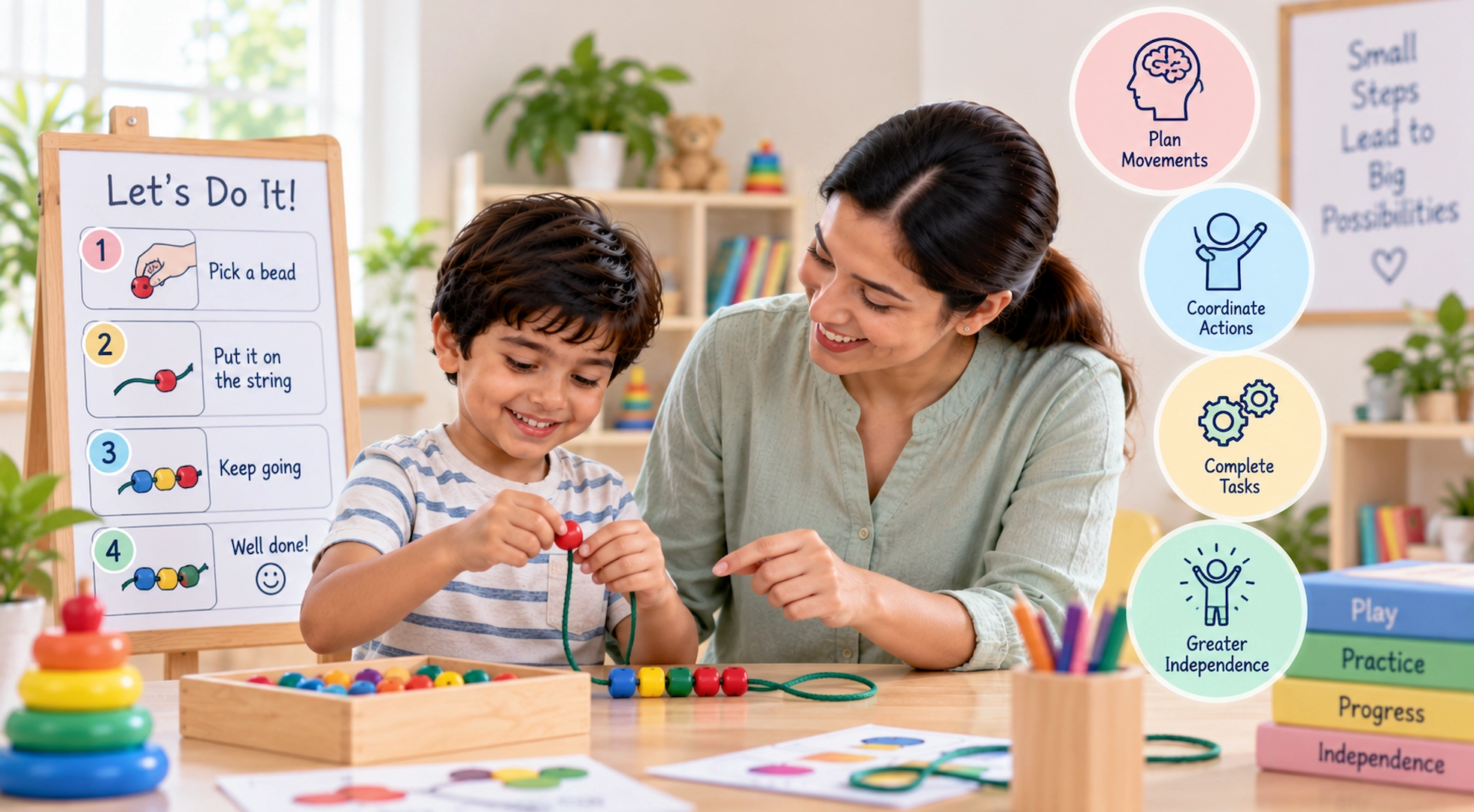
Some children know what they want to do but find it difficult to organise the movements needed to complete the activity. This is known as motor planning or praxis.
For example, a child may know they need to put on a shirt but struggle to find the correct opening, position their arms, or pull the shirt into place.
Occupational therapy can help children improve motor planning and coordination through:
- Breaking activities into simple steps
- Demonstrating and practising movements
- Using verbal or visual cues
- Repeating functional activities
These skills can support dressing, feeding, grooming, handwriting, play, and other everyday activities.
Motor planning → coordination → task completion → independence
A 2020 systematic review evaluated OT handwriting interventions for 4-6 year-old children and found structured, repetitive, OT-delivered programs perform best.
Occupational Therapy Is About Participation, Not Just Performance
One of the most important ideas in occupational therapy is that improving a skill is valuable when that improvement translates into better participation in everyday life.
- A stronger hand matters because it may help someone hold a spoon.
- Better attention matters because it may help a child complete a school activity.
- Improved sensory regulation matters because it may help a child tolerate getting dressed or participate in a classroom.
- Improved planning matters because it may help a child to manage a daily routine.
This connection between skill → activity → participation → independence is what makes occupational therapy different from simply practising exercises without a functional goal.
What Happens During Occupational Therapy for Daily Living Skills?
Occupational therapy usually begins with an evaluation of the child’s abilities, difficulties, goals, environment, and daily routines.
The therapist may observe how the child performs an actual activity rather than relying only on isolated tests. This can reveal whether the main difficulty involves motor skills, cognition, sensory processing, task sequencing, environmental barriers, or a combination of factors.
Based on the findings, the therapist may develop an individualised plan that includes:
- Assessment - identifying what makes the activity difficult.
- Goal setting - selecting meaningful daily activities to improve.
- Skill development - working on the physical, cognitive, sensory, or motor abilities involved.
- Functional practice - practising the actual activity or meaningful parts of it.
- Adaptation - modifying the task, equipment, or environment when necessary.
- Caregiver education - helping families or caregivers support practice outside therapy.
- Outcome review - checking whether the intervention is improving real-life participation.
This process allows occupational therapy to remain personalised rather than following the same programme for every individual.
How Occupational Therapy Builds Independence Over Time
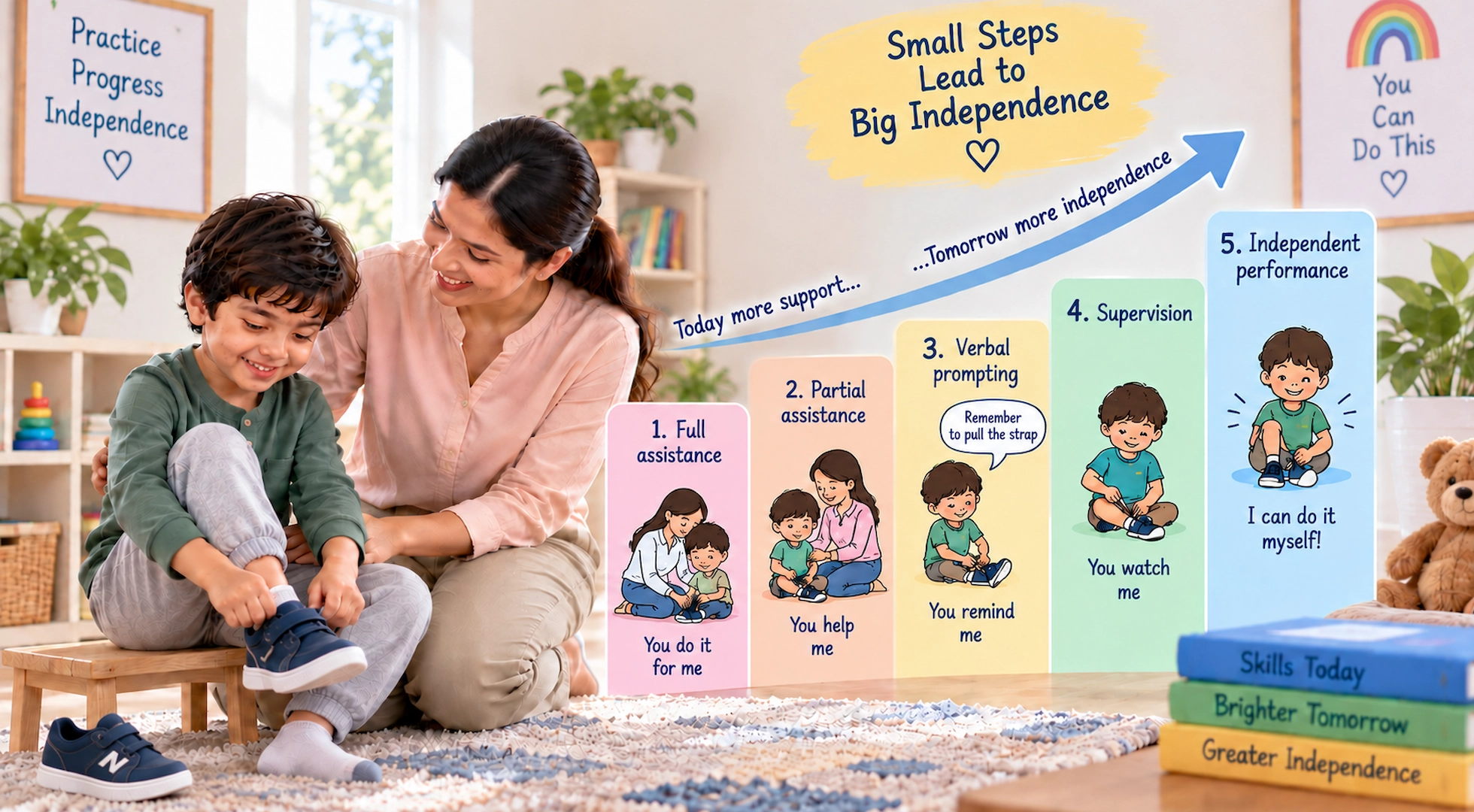
Improving daily living skills is usually a gradual process.
A child may first complete a task with substantial assistance. Over time, the level of support can be reduced as the child becomes more capable. In other situations, complete independence may not be realistic, and the goal may instead be greater participation, improved safety, reduced dependence, or a more efficient way of completing the activity.
For example, progress may look like:
The exact pathway depends on the individual.
This is particularly important when working with children. Development should not be measured only by whether a child can perform a task perfectly. Progress may also mean tolerating the activity longer, completing more steps, asking for help appropriately, using an adaptive strategy, or participating with less support.
A child may initially need a parent to guide each step of dressing. Over time, the child may complete some steps with verbal prompts, then with occasional reminders, and eventually manage much of the routine independently.
Why Early Support Can Make Everyday Activities Easier
When difficulties with everyday activities are identified early, occupational therapy can help families understand why the activity is difficult and what practical strategies may support participation.
For children, early support can address emerging difficulties with self-care, fine motor skills, sensory regulation, attention, play, and school participation.
Importantly, occupational therapy is not about expecting every child to perform an activity in exactly the same way. It is about finding a safe, practical, meaningful, and achievable way for that child to participate.
The Bigger Goal: Independence in Real Life
Occupational therapy improves daily living skills by connecting therapy to the activities that actually matter in everyday life.
For children, occupational therapy is ultimately about making everyday life more manageable and meaningful. Learning to dress, eat, brush teeth, use classroom materials, follow routines, play with others, and participate at home and school are important steps toward independence. By addressing the motor, sensory, cognitive, and emotional factors that affect these activities, pediatric occupational therapy helps children build skills that extend beyond the therapy room and into their everyday lives.
The ultimate goal is not simply to perform better during a therapy session. It is to help the child participate more fully in everyday life with greater independence, confidence, safety, and dignity.
That is why occupational therapy remains strongly connected to daily living: the therapy is built around life itself.
Expert Opinion of Dr. Dheeraj on how Occupational Therapy helps in Building Living Skills
"Occupational therapy is never just about repetitive exercises in a clinic setting. True progress happens when the skills a child develops transform their everyday routines at home and school. When we break down tasks into achievable steps, adapt tools, and address underlying sensory or motor barriers, we empower children to transition from total dependence to authentic self-reliance and confidence."


Frequently Asked Questions
Clear, clinical answers to common questions parents ask about improving daily living skills through pediatric occupational therapy.
Daily living skills are the practical abilities children use to take care of themselves, manage responsibilities, participate in their environment, and live as independently as possible. They include fundamental Activities of Daily Living (ADLs) like dressing and feeding, as well as Instrumental Activities of Daily Living (IADLs) like organising school supplies and routines.
Occupational therapy improves daily living skills through a combination of assessment, skill development, task practice, environmental changes, adaptive equipment, sensory strategies, cognitive strategies, and caregiver support.
No. Adaptive equipment is not about making a child dependent. It provides the right amount of support—such as adapted pencil grips, built-up handles, or visual supports—so the child can participate more successfully and independently.
Occupational therapy usually begins with an evaluation of the child's abilities, difficulties, goals, environment, and daily routines. The therapist observes how the child performs actual activities to see whether challenges stem from motor skills, cognition, sensory processing, task sequencing, or environmental factors.