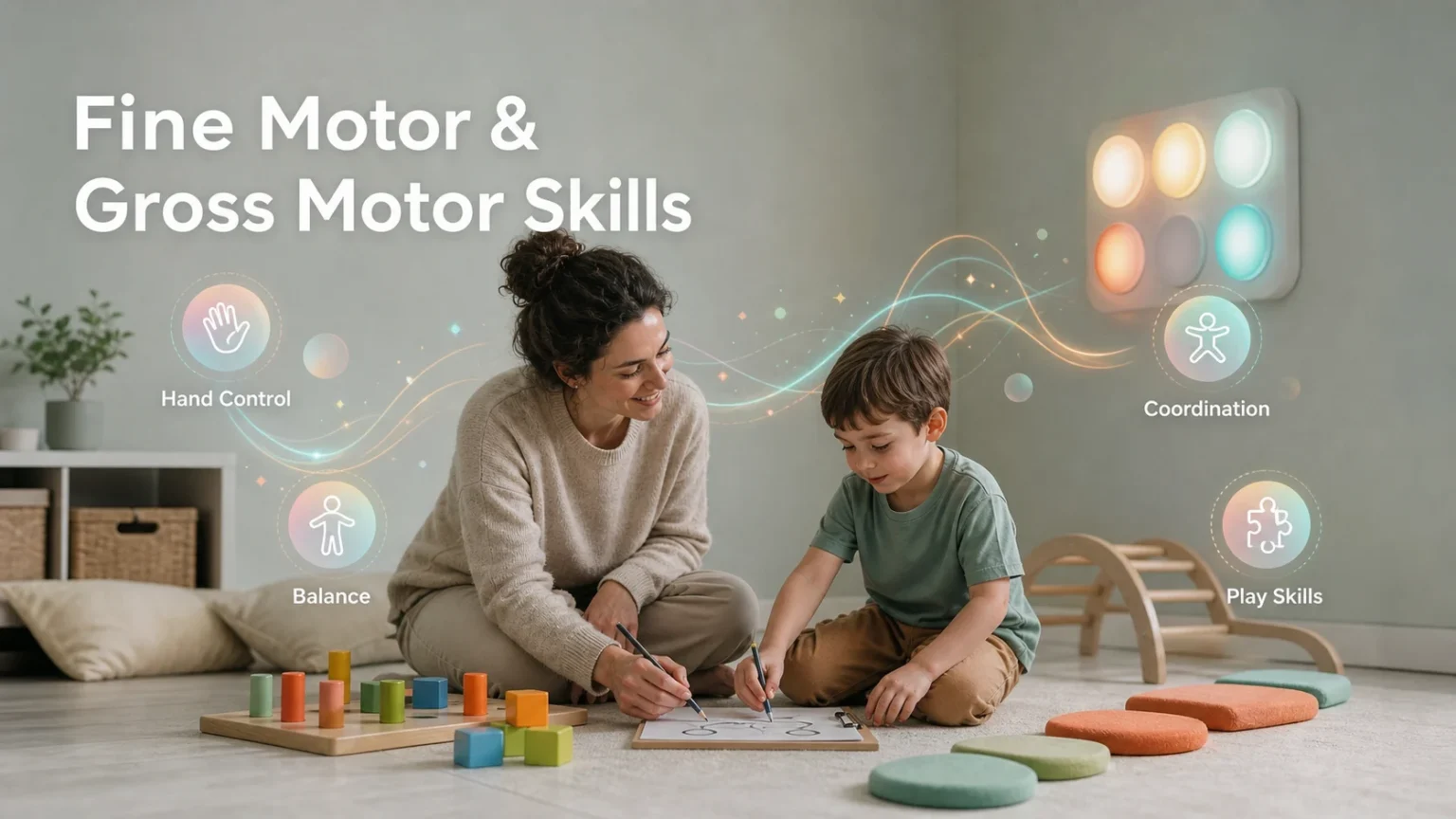
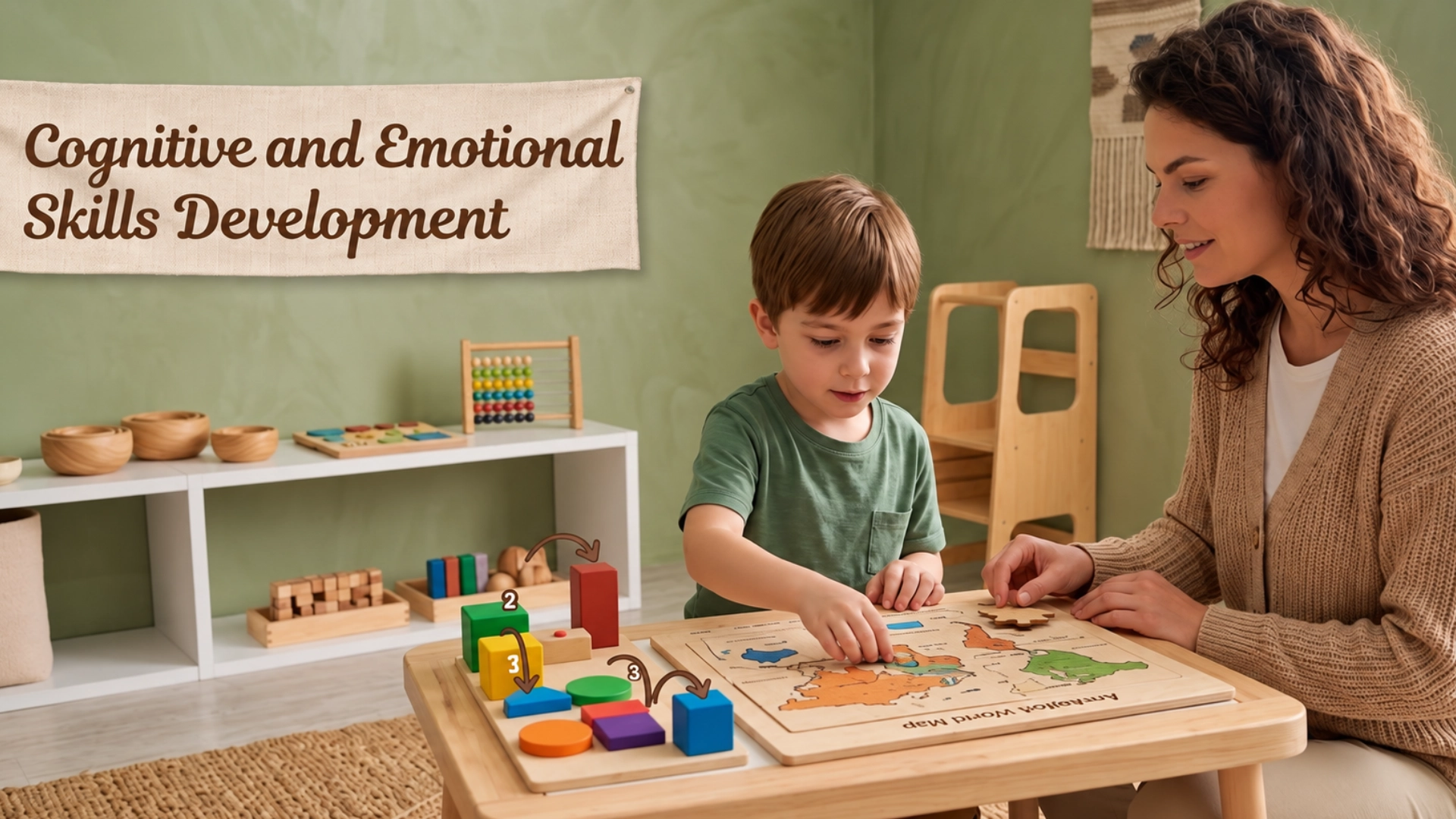
A child may be able to understand a task but still struggle to start it, remember the steps, stay focused, solve a problem, manage frustration, or recover after becoming overwhelmed. These difficulties are closely connected to cognitive and emotional skills such as attention, memory, executive functioning, problem-solving, self-regulation, and emotional awareness. This is where pediatric occupational therapy can play an important role. Rather than teaching these skills only through worksheets or isolated exercises, occupational therapists often build them through meaningful activities, daily routines, play, school tasks, and real-life situations. The goal is to help children use their cognitive and emotional abilities more effectively in everyday life.
For a child, cognitive and emotional development is not separate from daily functioning. Remembering instructions affects classroom participation. Attention affects learning. Planning affects getting dressed or completing homework. Emotional regulation affects play, communication, and relationships. Therefore, occupational therapy for cognitive and emotional skills focuses on connecting these underlying abilities with what the child actually needs to do at home, school, and in the community.
In India, cognitive and learning-related challenges are more common than many parents realise. A nationwide systematic review found that learning disabilities affect an estimated 10.7% of Indian children and adolescents, and other estimates put the figure as high as 10-12% of the school-going population - roughly four children in every classroom.
What Are Cognitive and Emotional Skills?
Cognitive skills are the mental abilities children use to understand information, remember things, pay attention, make decisions, and complete tasks.
Important cognitive skills include:
- Attention and concentration
- Memory and recall
- Executive functioning
- Planning and organisation
- Problem-solving
- Flexible thinking
- Task initiation and completion
Emotional skills, meanwhile, help children recognise, understand, express, and manage their emotions. They also influence how a child responds to frustration, changes, social situations, and challenging tasks.
These areas are strongly connected. A child who has difficulty with executive functioning may also find it harder to manage frustration or control impulses. Research increasingly recognises the relationship between executive function and emotional regulation, particularly in children with neurodevelopmental conditions such as autism and ADHD.
This connection shows up clearly in Indian data. A landmark nationwide study published in PLOS Medicine found that about 1 in 100 children in India under age 10 may have autism, and nearly 1 in 8 has at least one neurodevelopmental condition - a figure roughly ten times higher than earlier census-based estimates.
Occupational therapy therefore looks beyond a single skill and asks a more functional question:
How Occupational Therapy Supports Cognitive Skills
Occupational therapists work on cognitive abilities in ways that are connected to meaningful occupations. In occupational therapy, this is often described through functional cognition - the ability to use cognitive processes such as executive functioning, metacognition, and performance skills to complete real-life activities.
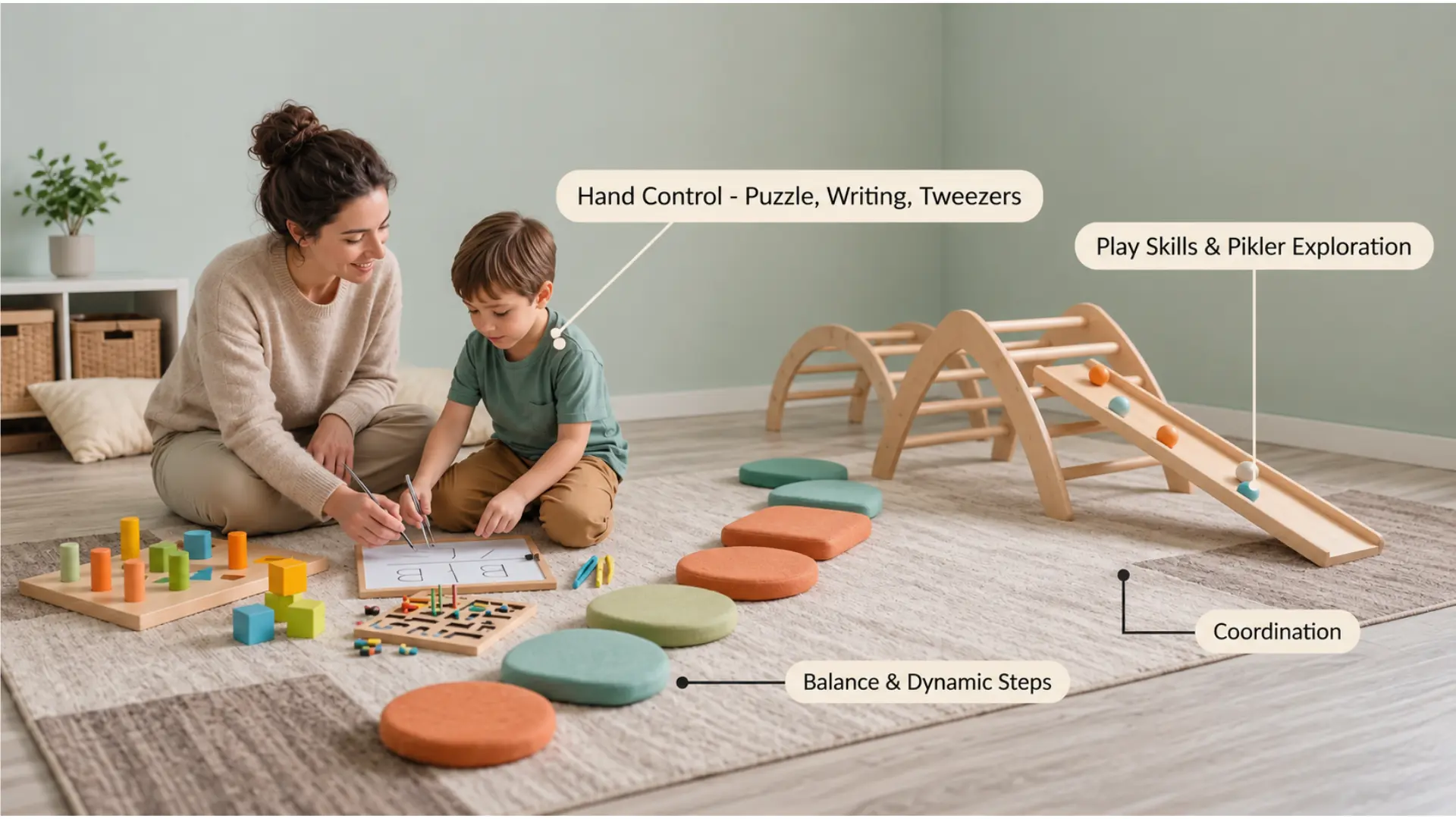
1. Building Executive Functioning
Executive functioning is one of the most important cognitive areas addressed in pediatric occupational therapy.
It includes the ability to:
- Plan what needs to be done
- Organise materials and actions
- Prioritise tasks
- Start an activity
- Shift between activities
- Monitor progress
- Complete a task
For example, getting ready for school involves much more than dressing. A child has to remember what comes next, find the required items, organise the sequence, manage time, and adjust when something goes wrong.
Occupational therapy can break such activities into manageable steps and gradually help the child take greater responsibility for planning and completing them.
Research has identified executive functioning as an important area within pediatric occupational therapy, with occupational therapists using both assessment tools and functional interventions to understand how executive skills affect children's everyday performance.
Practical strategies may include:
- Time management and organisation: Using schedules, timers and routines.
- Prioritisation: Learning what needs to be done first.
- Task planning and initiation: Breaking a large activity into smaller steps and helping the child begin independently.
The purpose is not simply to make a child better at planning exercises. It is to help them plan real activities more successfully.
2. Strengthening Attention and Focus

Attention allows children to take in information, stay with a task, and respond appropriately to what is happening around them.
A child who struggles with attention may:
- Leave tasks unfinished
- Become distracted easily
- Miss instructions
- Shift between activities frequently
- Find it difficult to sustain effort
Occupational therapy can help children gradually build sustained attention while also identifying environmental factors that make concentration harder.
For example, therapy may involve reducing unnecessary distractions, organising the workspace, using visual supports, introducing movement breaks, or adjusting the complexity and duration of an activity.
This is particularly important because attention is rarely an isolated skill. It influences learning, handwriting, classroom participation, play, self-care, and social interaction.
Attention difficulties show up often in Indian classrooms. A study across schools in Tamil Nadu found ADHD prevalence between 8.8% and 11.32%, while a study in Mysuru, Karnataka found an overall prevalence of 13.8% - with boys affected nearly one-and-a-half times more often than girls (15.86% vs. 10.86%).
3. Improving Memory and Recall
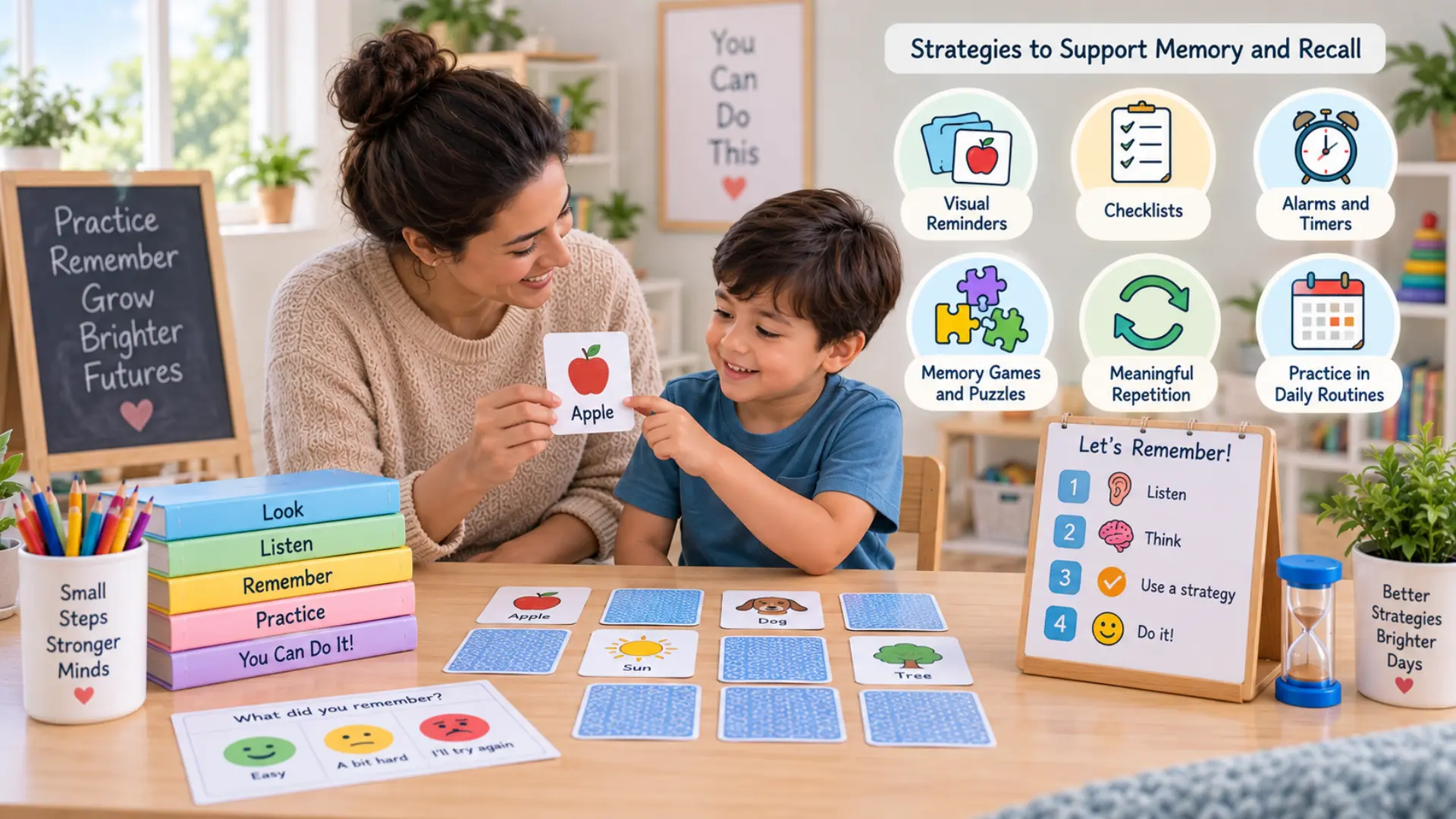
Memory allows children to retain information and use it when needed.
A child may understand an instruction when it is given but forget the steps a few minutes later. Another child may remember information better when it is presented visually rather than verbally.
Occupational therapy can support working memory and recall by using meaningful repetition and practical strategies.
These may include:
- Recall practice during everyday activities
- Visual reminders
- Checklists
- Alarms and timers
- Memory games and puzzles
- Repeated practice within familiar routines
External support is especially useful because the goal is not always to make the child remember everything independently. Sometimes the more functional goal is to help the child use the right strategy at the right time.
4. Developing Problem-Solving Skills
Everyday life constantly presents small problems.
A child may need to figure out:
- “My pencil broke. What should I do?”
- “This toy is not working. How can I fix it?”
- “I cannot reach the object. What can I safely do?”
Occupational therapy uses real-world functional tasks to develop problem-solving, judgement, planning, and flexible thinking.
The therapist may encourage the child to:
- Identify the problem.
- Think of possible solutions.
- Choose an appropriate option.
- Try it.
- Review what happened.
- Consider another solution if necessary.
This helps transform problem-solving from an abstract cognitive exercise into a skill that can be used in everyday situations.
How Occupational Therapy Supports Emotional Skills
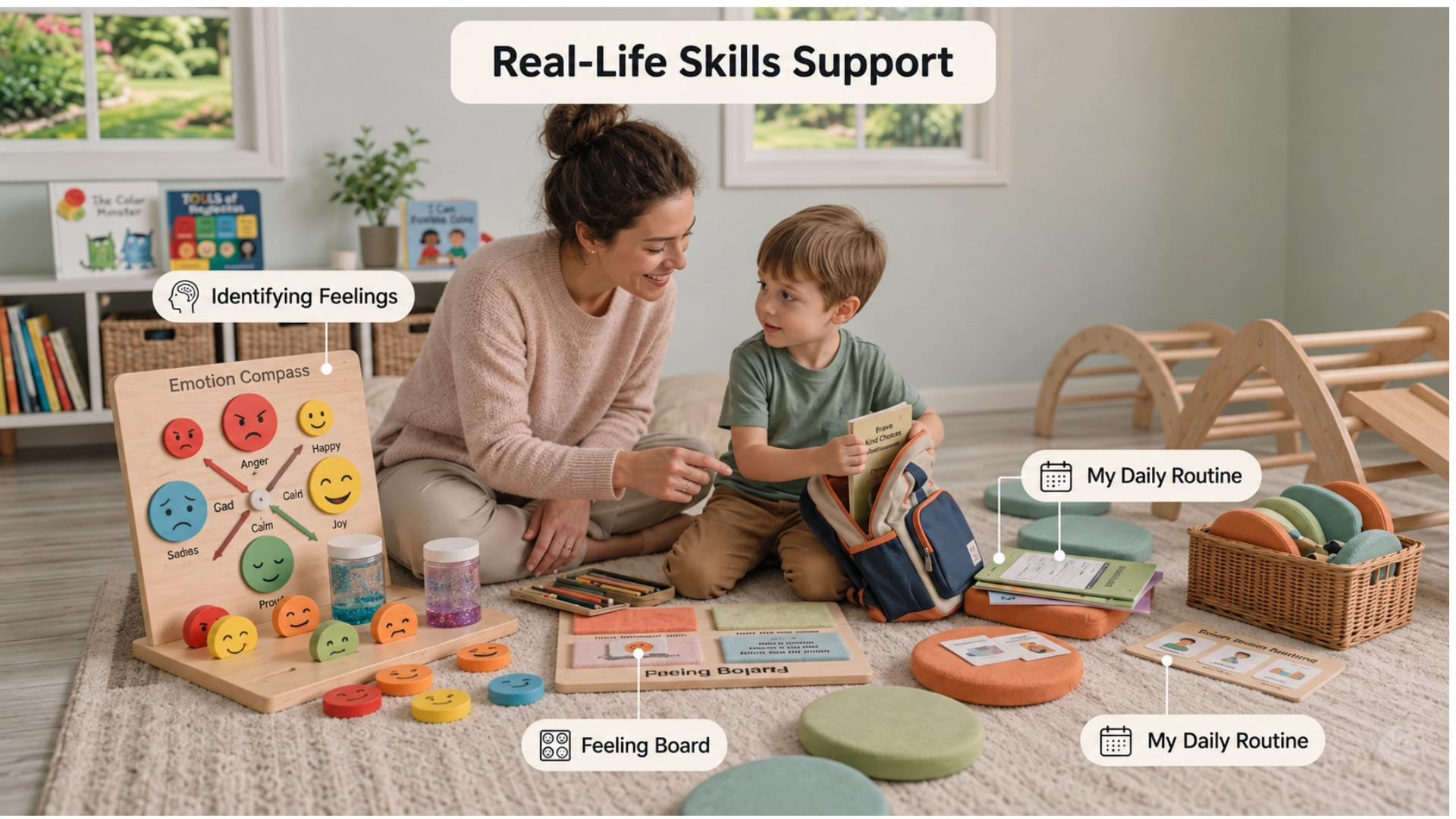
Cognitive development is only one side of functional participation. A child may know what they are supposed to do but become too frustrated, anxious, overwhelmed, or emotionally dysregulated to do it.
This is where emotional regulation and self-regulation become important.
1. Supporting Sensory Regulation
For some children, emotional difficulties are influenced by how they experience sensory information.
Sounds, lights, touch, movement, crowds, or changes in the environment may feel overwhelming. When the nervous system becomes overloaded, the child may have difficulty attending, communicating, participating, or regulating emotions.
Occupational therapy addresses sensory processing and sensory regulation as part of a broader intervention plan.
Depending on the child's individual needs, activities may include:
- Calming movement activities
- Deep-pressure activities where clinically appropriate
- Sensory tools
- Environmental modifications
- Structured sensory routines
Importantly, sensory strategies should be individualised rather than treated as a universal solution. Evidence suggests that cognitive and occupation-based interventions can support self-regulation in children with sensory processing challenges, but intervention should be matched to the child's needs and functional goals.
2. Teaching Coping and Calming Strategies
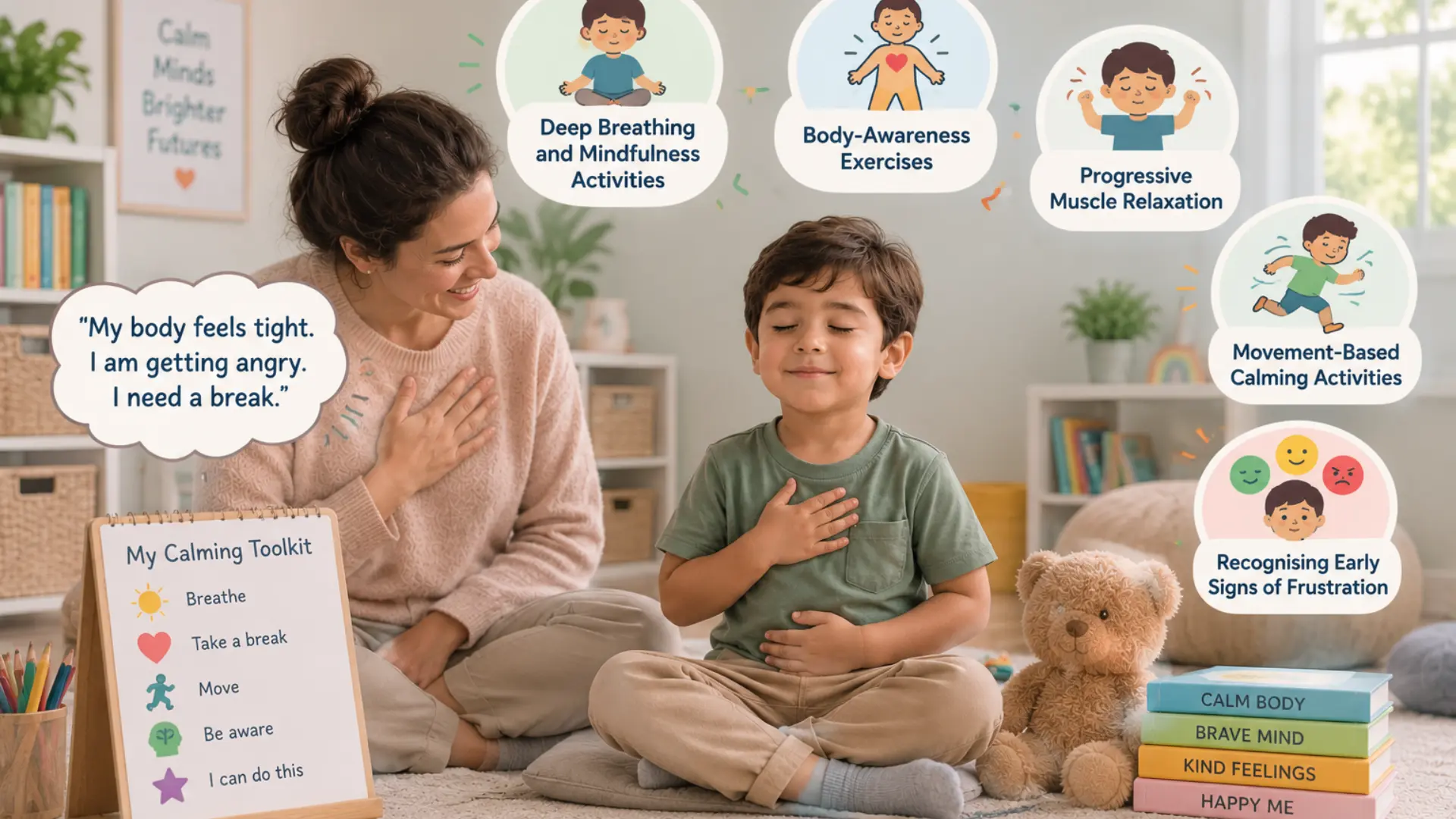
Children need to learn what they can do when they feel overwhelmed.
Occupational therapy teaches simple coping strategies that a child can gradually use outside the therapy room.
These may include:
- Deep breathing and mindfulness activities
- Body-awareness exercises
- Progressive muscle relaxation
- Movement-based calming activities
- Recognising early signs of frustration
For a young child, this might begin with something as simple as recognising:
“My body feels tight. I am getting angry. I need a break.”
With practice, the child can begin moving from simply reacting to a situation toward recognising and managing their response.
3. Developing Emotional Awareness
Before children can manage emotions effectively, they need to understand what they are experiencing.
Emotional awareness involves recognising emotions, identifying triggers, understanding body signals, and communicating feelings.
Occupational therapists uses:
- Emotion charts
- Stories and visual supports
- Role-playing
- Expressive activities
- Everyday conversations about feelings
For example, instead of simply telling a child to “calm down,” therapy may help them understand:
What happened → What did I feel? → What did my body do? → What can I do next?
This creates a bridge between emotional awareness and emotional regulation.
4. Creating Structure and Predictability
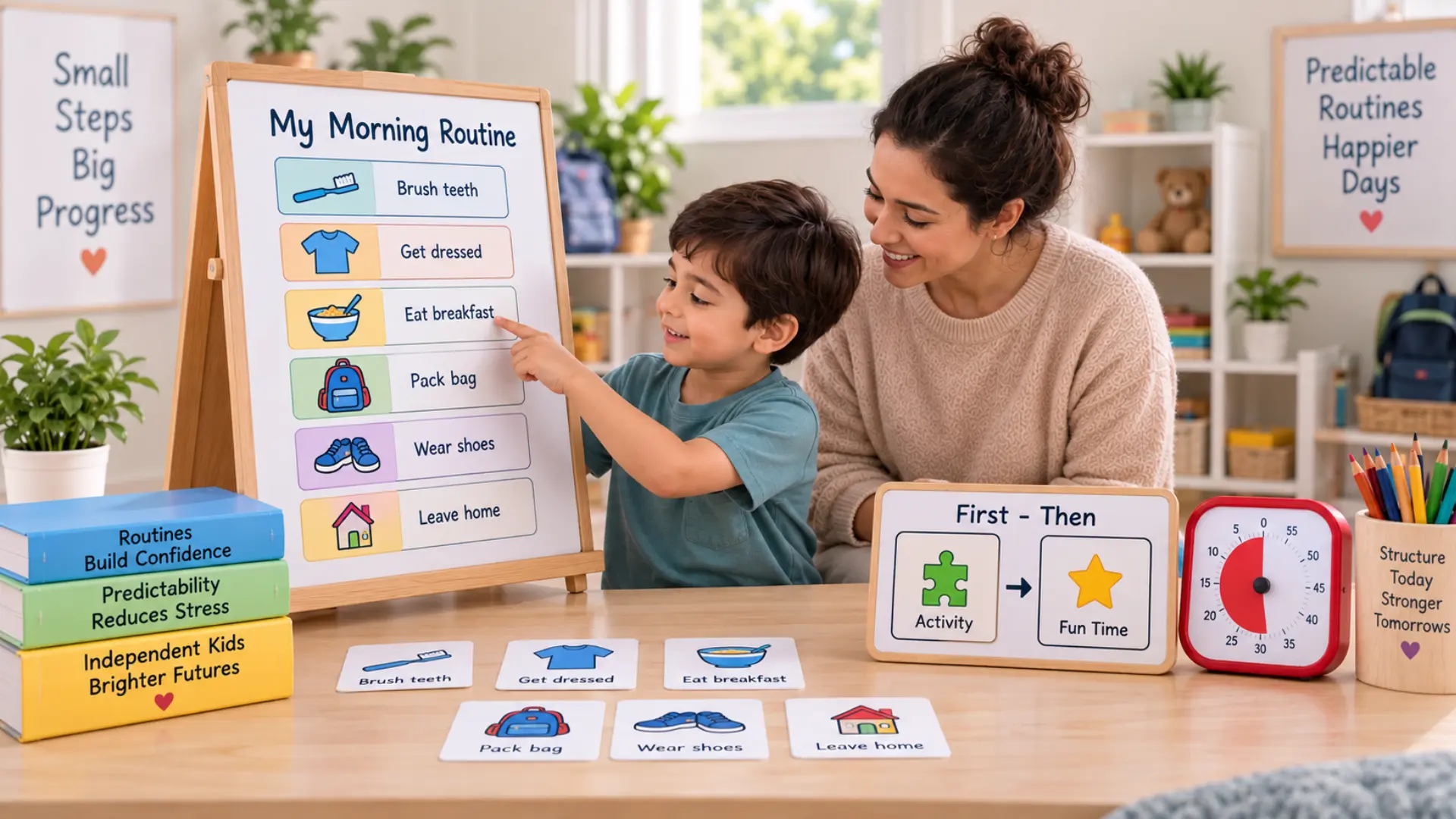
Predictability can make everyday activities easier for children who find transitions or unexpected changes difficult.
Occupational therapy introduces:
- Consistent daily routines
- Visual schedules
- Timers
- First-then systems
- Transition routines
- Clear activity sequences
These supports reduce the amount of information a child has to hold in their mind at once.
For example, instead of saying:
“Get ready for school.”
A visual sequence might show:
Brush teeth → Get dressed → Eat breakfast → Pack bag → Wear shoes → Leave home.
Over time, the child can become more familiar with the sequence and increasingly participate with less adult prompting.
How Occupational Therapists Actually Build These Skills
One of the strengths of occupational therapy is that cognitive and emotional skills are often developed through activities that have a purpose.
Rather than separating every skill into an isolated exercise, the therapist may use several approaches depending on the child's needs.
Task Analysis and Sequencing
A complex activity is broken into smaller steps so the child can understand what to do, in what order, and how to complete it.
Activity-Based Intervention
Skills are practised through meaningful activities such as games, schoolwork, self-care, crafts, play, and daily routines.
Cognitive-Behavioural Strategies
Age-appropriate cognitive-behavioural strategies may help children understand the relationship between thoughts, feelings, behaviour, and responses to challenging situations.
Social Skills Training
Activities can help children practise turn-taking, following social cues, flexible thinking, communication, and appropriate responses during interaction.
Caregiver Education and Coaching
Parents and caregivers are important parts of the process. Therapists can help families understand how to practise strategies during ordinary routines rather than limiting learning to the therapy session.
This functional approach is consistent with the broader occupational therapy focus on helping people participate in meaningful daily activities, including self-care, school, routines, and other occupations.
Why Real-Life Activities Matter in Cognitive and Emotional Therapy
Imagine a child learning how to organise a school bag.
At first glance, this looks like a simple self-care or school-readiness task.
But the activity may involve:
- Attention → noticing what needs to be packed
- Memory → remembering required items
- Executive function → planning the sequence
- Problem-solving → finding a missing item
- Emotional regulation → staying calm when something is forgotten
- Independence → completing the routine with fewer prompts
This is why occupational therapy does not view cognitive and emotional skills as isolated abilities.
They work together during occupations.
A systematic review of pediatric occupational therapy also found that interventions are aimed at improving children's engagement and participation in life roles, although the strength of evidence varies across specific intervention approaches and conditions.
Who Can Benefit From Occupational Therapy for Cognitive and Emotional Skills?
Children with different developmental and functional needs may experience difficulties with cognitive or emotional skills. Occupational therapy may be considered when these difficulties interfere with everyday participation.
This can include children with:
- Autism Spectrum Disorder (ASD)
- ADHD
- Developmental delays
- Learning difficulties
- Sensory processing challenges
- Emotional regulation difficulties
- Difficulties with executive functioning
- Challenges with daily living and school participation
However, occupational therapy is not simply about a diagnosis. Two children with the same diagnosis can have very different strengths and challenges.
The assessment should therefore focus on what the individual child is experiencing and how those difficulties affect everyday occupations.
What Changes Can Parents Expect?
The most meaningful progress is often seen outside the therapy room.
A child may gradually begin to:
- Start tasks with fewer reminders
- Follow routines more independently
- Stay focused for longer
- Remember and follow multiple steps
- Solve everyday problems more effectively
- Recognise emotions and triggers
- Use calming strategies
- Handle transitions more comfortably
- Participate more confidently with others
- Complete daily activities with greater independence
These outcomes are closely connected to the central purpose of occupational therapy: helping children participate more successfully in the activities that matter in their everyday lives.
Cognitive and Emotional Skills Work Together
It is tempting to think of cognition and emotions as two separate areas.
In everyday life, they are deeply connected.
A child may have the cognitive ability to complete homework but struggle to begin because the task feels overwhelming. Another child may know how to solve a problem but become too frustrated to try another solution. A child may understand a classroom instruction but lose focus because the environment is distracting.
This is why effective occupational therapy for cognitive and emotional development considers the whole picture:
Sensory regulation → Attention → Cognitive processing → Executive functioning → Emotional regulation → Functional participation
Improving one area can make it easier to work on another.
The Goal Is Not Just Better Skills - It Is Better Participation
The ultimate goal of occupational therapy is not for a child to become good at therapy activities.
It is for the child to use those skills in real life.
That may mean:
- Getting dressed independently
- Completing a classroom activity
- Remembering a routine
- Managing a transition
- Playing with peers
- Handling frustration
- Solving an everyday problem
- Participating more confidently at home and school
In other words, cognitive and emotional skill development becomes meaningful when it helps a child participate, communicate, learn, and become more independent.
Occupational therapy therefore provides a practical bridge between how a child thinks and feels and what the child needs to do every day.
With individualised assessment, meaningful activities, appropriate environmental support, and consistent practice across home and school, children can develop stronger cognitive strategies, better emotional awareness, improved self-regulation, and greater independence in everyday life. The evidence base supports the role of occupational therapy in functional cognition and participation, while also highlighting the importance of matching interventions to the child's specific needs and goals.
Expert Opinion of Dr. Dheeraj on how Occupational Therapy helps in Emotional Skills
"Children often experience emotional overwhelm not out of willful defiance, but because their nervous systems and executive planning capacities are stretched beyond threshold. Pediatric occupational therapy establishes the critical biological and sensory foundations needed for a child to notice distress early, communicate boundaries, and transition through life routines with resilience and quiet confidence."